When discussing heat pumps and mechanical hot water plantrooms, most people focus on hot water temperatures, storage vessels, or energy efficiency. However, one of the most important components inside any heat pump system is the refrigerant.
Refrigerants are the working fluids that enable heat pumps to transfer energy from the surrounding air into your hot water system. Without refrigerant, there would be no heat transfer process and no efficient hot water production.
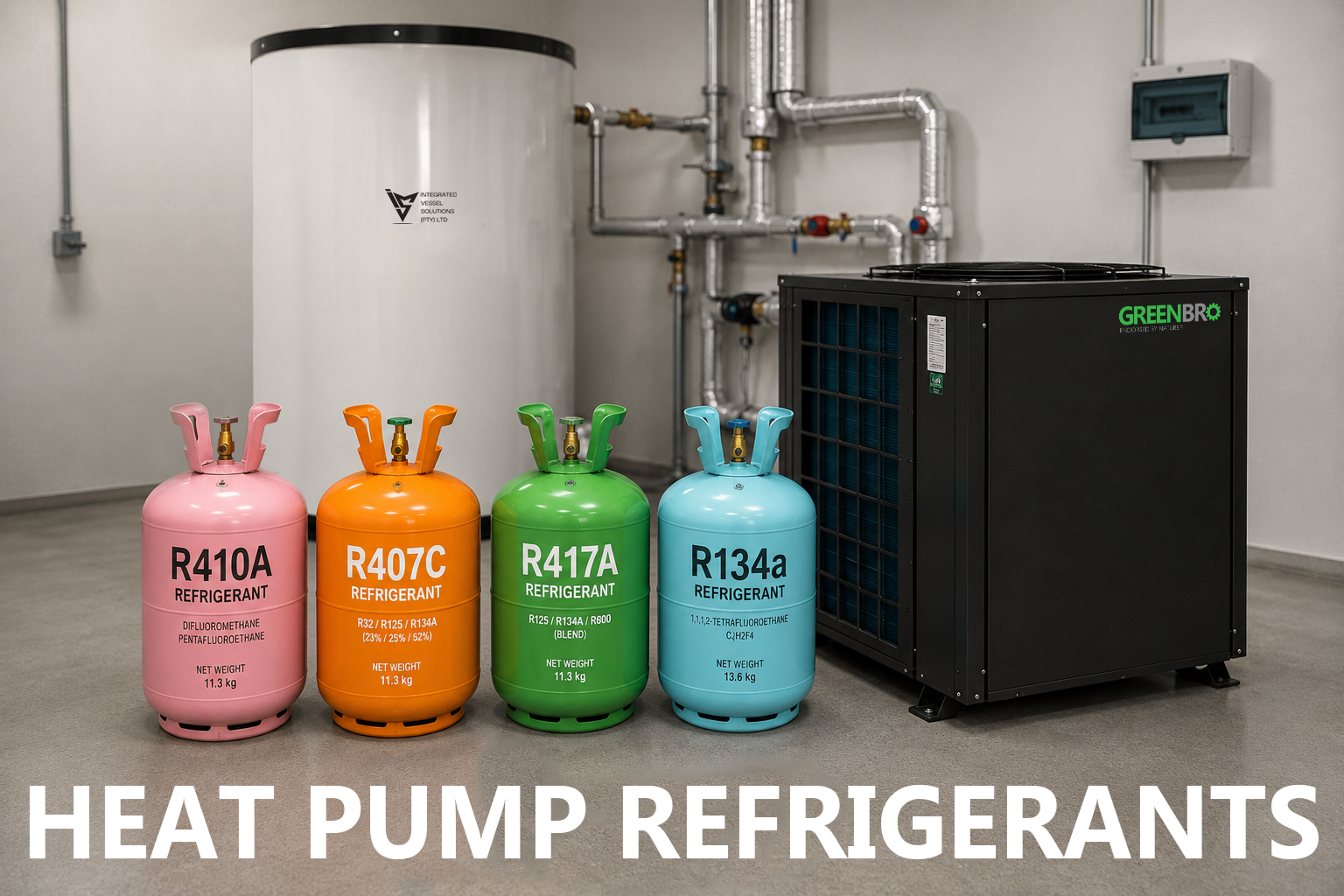
At Greenbro South Africa, our commercial and residential heat pump systems commonly utilize R410A, R407C, R417A, and R134a refrigerants. Understanding what these refrigerants are, how they work, and whether they are safe can help building owners, consultants, engineers, and facility managers make informed decisions when specifying hot water systems.
What Does the “R” Mean in Refrigerant Names?
The letter “R” stands for Refrigerant.
The numbering system is governed by ASHRAE (American Society of Heating, Refrigerating and Air-Conditioning Engineers) and is used worldwide to identify refrigerants according to their chemical composition and molecular structure.
Examples include:
- R410A
- R407C
- R417A
- R134a
Some refrigerants consist of a single chemical compound, while others are carefully engineered blends designed to improve efficiency, operating pressures, and environmental performance.
R410A Refrigerant
Composition
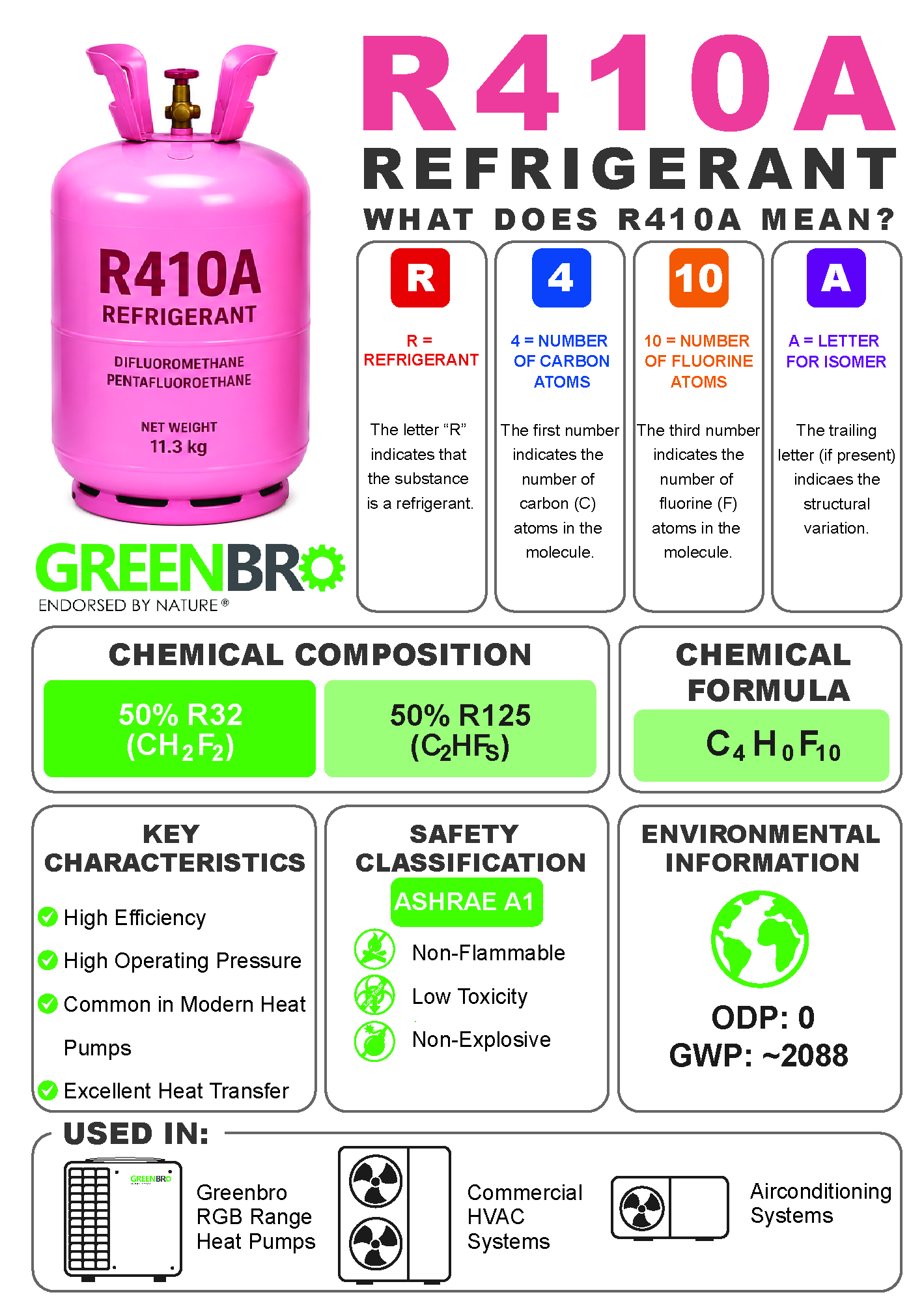
R410A is a blended refrigerant consisting of:
- 50% R32 (Difluoromethane)
- 50% R125 (Pentafluoroethane)
Why Is R410A Popular?
R410A has become one of the most widely used refrigerants in modern heat pumps and HVAC systems due to its:
- Excellent heat transfer characteristics
- High energy efficiency
- Reliable performance
- Suitability for high-pressure systems
Safety Classification
ASHRAE Classification: A1
This means:
✓ Low Toxicity
✓ Non-Flammable
✓ Non-Explosive
When installed and serviced correctly, R410A is considered extremely safe for commercial and residential applications.
R407C Refrigerant
Composition
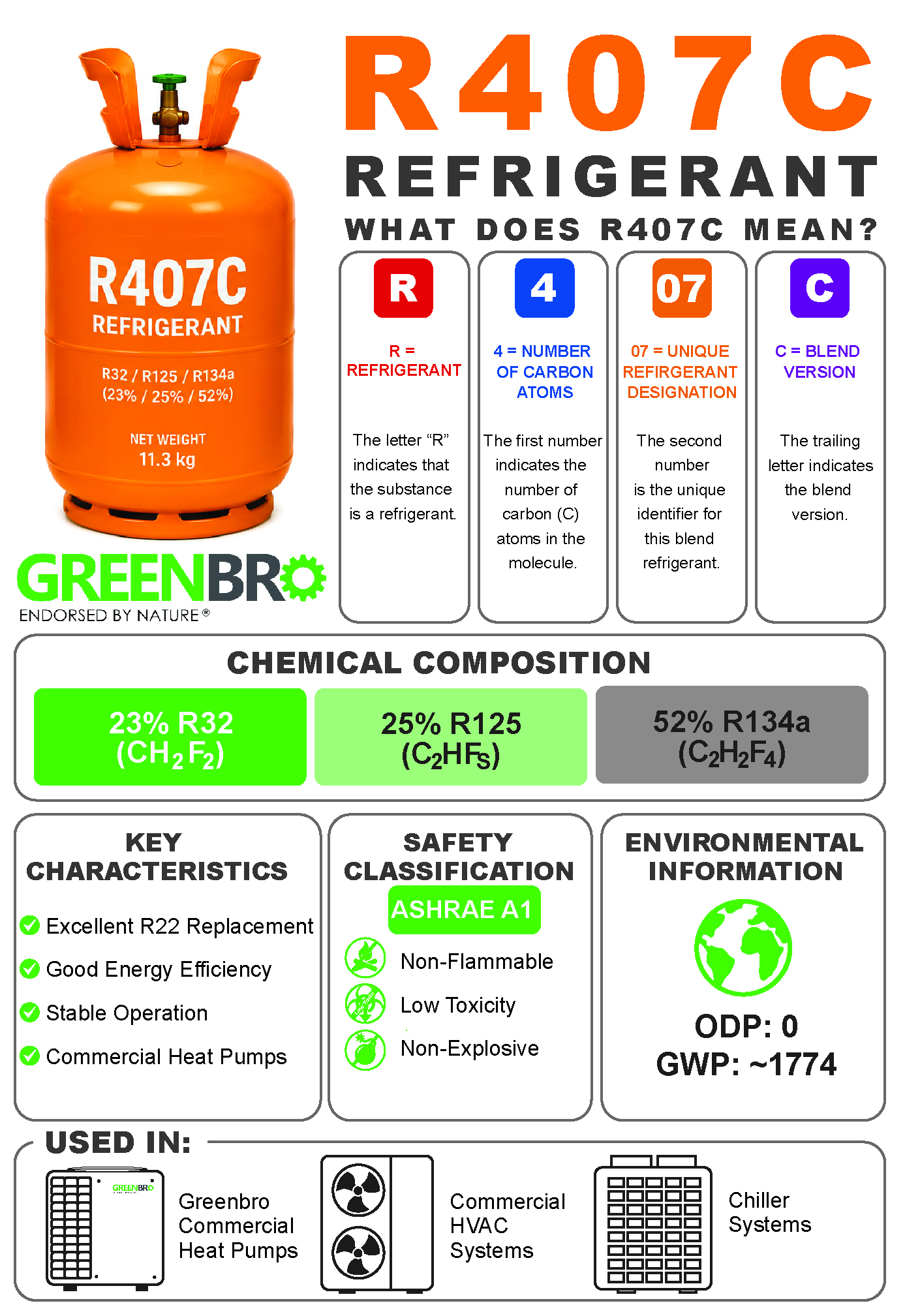
R407C is a blended refrigerant containing:
- 23% R32
- 25% R125
- 52% R134a
Advantages
R407C is commonly used in:
- Commercial heat pumps
- Air-conditioning systems
- Chillers
- HVAC applications
Key benefits include:
- Good energy efficiency
- Stable operation
- Proven performance
- Effective replacement for older R22 systems
Safety Classification
ASHRAE Classification: A1
✓ Low Toxicity
✓ Non-Flammable
✓ Non-Explosive
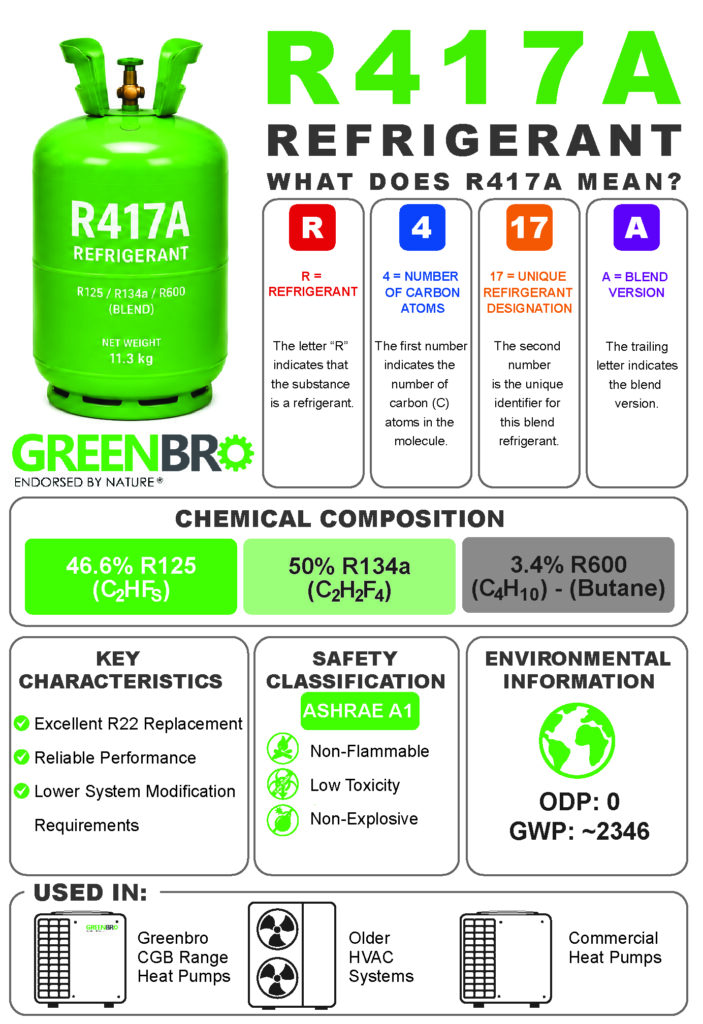
R417A Refrigerant
Composition
R417A consists of:
- 46.6% R125
- 50% R134a
- 3.4% R600 (Butane)
Advantages
R417A was developed primarily as a retrofit replacement for older R22 systems and offers:
- Reliable operation
- Reduced system modification requirements
- Suitable performance in retrofit applications
Safety Classification
ASHRAE Classification: A1
Although it contains a very small percentage of butane, the overall refrigerant blend remains classified as non-flammable and safe for normal operating conditions.
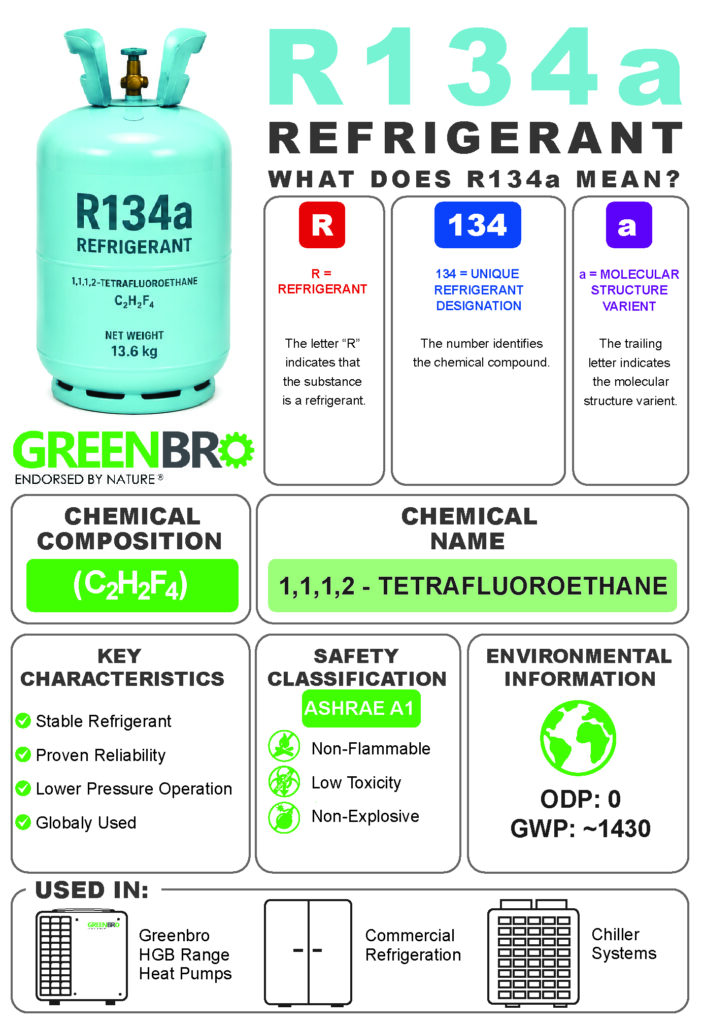
R134a Refrigerant
Chemical Formula
C₂H₂F₄
Chemical Name:
1,1,1,2-Tetrafluoroethane
Applications
R134a is commonly used in:
- Heat pumps
- Chillers
- Commercial refrigeration
- Automotive air-conditioning systems
Advantages
- Stable operating performance
- Long service life
- Proven reliability
- Lower operating pressures
Safety Classification
ASHRAE Classification: A1
✓ Low Toxicity
✓ Non-Flammable
✓ Non-Explosive
Are Heat Pump Refrigerants Dangerous?
A common misconception is that heat pumps contain dangerous or explosive gases.
The refrigerants used in Greenbro heat pumps are classified as A1 refrigerants, meaning they are:
- Non-Flammable
- Non-Explosive
- Low Toxicity
- Safe when handled correctly
In addition, refrigerants circulate within a sealed refrigeration circuit and never mix with the potable water supplied to your building.
Environmental Impact of Modern Refrigerants
Modern refrigerants used in heat pump technology have significantly improved environmental characteristics compared to older refrigerants.
All four refrigerants discussed in this article have:
✓ Zero Ozone Depletion Potential (ODP)
✓ Proven industry acceptance
✓ Reliable long-term performance
While they still possess Global Warming Potential (GWP), they represent a substantial improvement over many legacy refrigerants and continue to be widely used in commercial heat pumps and hot water systems worldwide.
Choosing the Right Refrigerant for Your Application
The refrigerant selected for a heat pump depends on several factors:
- Desired water temperature
- Ambient operating conditions
- System efficiency requirements
- Application type
- Long-term operating costs
At Greenbro South Africa, refrigerant selection forms part of our complete mechanical hot water plantroom design process, ensuring each heat pump system is optimized for efficiency, reliability, and long-term performance.
Partner with Greenbro South Africa
Whether you require commercial heat pumps, hot water storage vessels, heat accumulators, circulation pumps, plantroom upgrades, or ongoing maintenance and repairs, Greenbro South Africa provides complete turnkey mechanical hot water plantroom solutions.
Our team can assist with system design, equipment selection, installation, commissioning, maintenance, and lifecycle support to ensure your hot water system delivers maximum efficiency and reliability for years to come.
Call To Action: Have any further questions? Kindly contact us.