Commercial Heat Pump Vs Electric Resistance Heating Systems: Best Choice For SA Facilities
Date: 07/11/2025
Published by Greenbro South Africa (Pty) Ltd
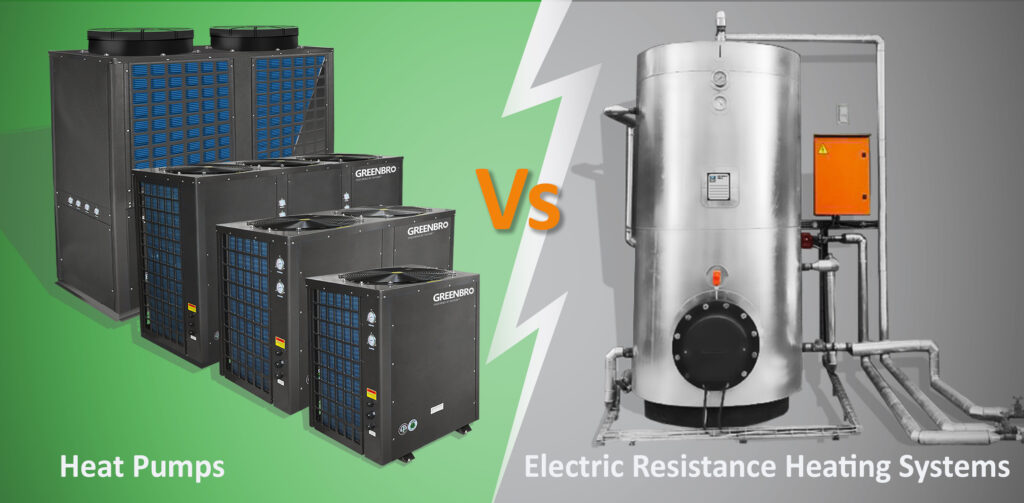
Choosing between a commercial heat pump and an electric resistance heating system can be complicated, especially with rising energy costs, load shedding, and sustainability targets. With South Africa’s rising tariffs, load shedding, and sustainability pressures, your hot-water choice has long-term consequences.
In most South African facilities, heat pumps are more cost-effective to run and better for reducing emissions. However, hot water storage vessels with standard electric resistance heating elements are a reliable source of heating and can produce higher temperatures. Although they are initially inexpensive, their overall operational cost in terms of energy consumption is more significant than heat pumps.
To ensure you’re making the right decision for your facility, it’s important to first understand how these two heating technologies compare. In this guide, we’ll break down heat pump vs electric resistance heating systems’ performance using real-world insights. That way, you’ll be able to make a more confident and informed decision.
Heat Pump Vs Electric Resistance Heating (ERH) Systems: Which Is Better?
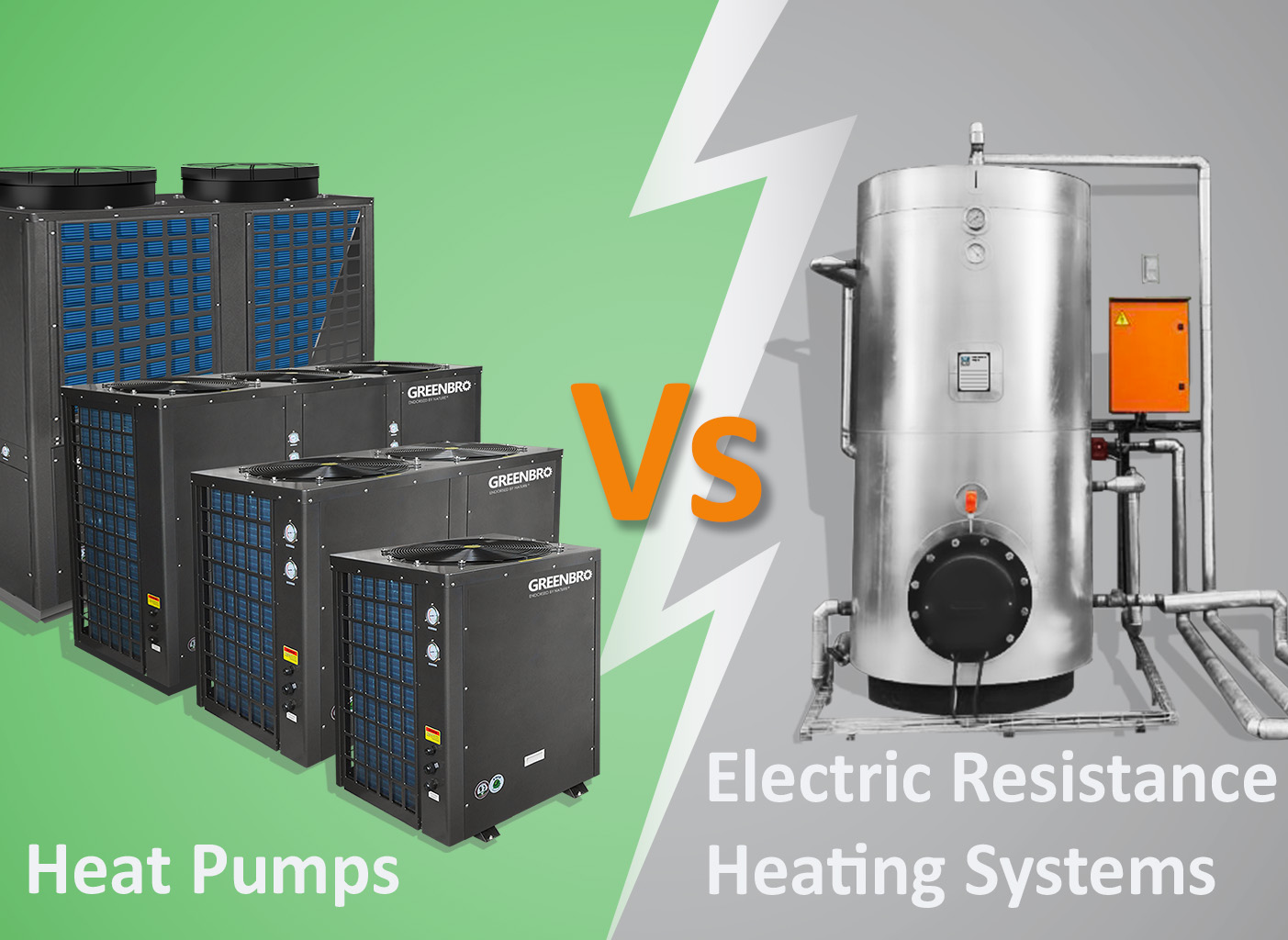
There’s no single winner in the debate over a heat pump vs an electric resistance heating system. Usually, heat pumps are cheaper to run and, according to the International Energy Agency, much more efficient than electric resistance heating. On the other hand, ERH systems can deliver higher outlet temperatures quickly and provide a simple, low-maintenance solution with predictable performance.
For many South African hotels and hospitals, a hybrid system offers the best balance. The heat pump handles most of the heating load efficiently, while the ERH system supports peak demand and serves as backup during maintenance or heat pump downtime. Still, but neither of these systems can operate during power outages without an auxiliary power supply.
It’s important to remember that the performance of your commercial heat pump depends on its operating conditions, such as the environmental temperature and its operating hours and cycles. Additionally, making the wrong choice can lock your site into years of avoidable costs and downtime.
To avoid this, let’s take a closer look at the difference between heat pumps and electric resistance heating systems and what these comparisons mean for your facility.
Heat Pumps Vs Electric Resistance Heating Systems: The Basics
A heat pump uses electricity to move heat from the air into water using the refrigeration principle. Because it transfers heat in this manner, it can deliver more energy than the electricity it consumes. This measure of energy efficiency is known as the COP (Coefficient of Performance). For example, a COP of 3.0 means the heat pump produces 3 kWh of heat for every 1 kWh of electricity used.
Electric resistance heating elements generate warmth directly by converting power into heat energy via electrical resistive heating. Their efficiency is typically a ratio of 1:1, meaning 1 kWh of electricity produces 1 kWh of heat. They perform reliably but have higher running costs compared to a high-COP heat pump when used continuously.
In practice, heat pumps can lower your running costs and emissions when you pair them with sensible temperatures and tariff management.
However, electrical resistance heating systems remain the practical choice for very high temperatures or simple redundancy.
For many South African facilities, a hybrid system offers the best balance. The heat pump handles day-to-day efficiency, while the ERH elements steps in for peak demand and backup.
Running Cost And Tariffs
In South Africa, electricity is billed using time-of-use (TOU) tariffs, where power is cheap during off-peak hours and expensive during peak periods.
If your facility heats water off-peak and stores it for use later, a heat pump can operate at a much lower running cost. This approach is known as load shifting, and it’s one of the biggest cost advantages of heat pumps under Eskom’s tariffs and charges.
For standard electric resistance heating systems, the main cost driver is total energy consumption and timing. Without thermal storage or off-peak scheduling, these systems can become expensive to operate during peak-rate periods.
Maintenance And Reliability
Heat pumps have predictable maintenance requirements. These mainly involve the compressor, circulation pumps, control systems, and heat exchangers.
Hot water storage vessels with standard electric resistance elements, on the other hand, have simpler maintenance needs focused on electrical elements, thermostats, safety valves, and anode rods. While they are mechanically straightforward, poor water quality and scaling can reduce element efficiency or lifespan.
It’s essential to factor ongoing maintenance into your total lifecycle cost. This includes the full cost of ownership over your system’s lifespan, which is a key consideration for sustainability-focused facilities.
The Green Building Council South Africa (GBCSA) provides guidance on how heating systems are typically assessed for operational efficiency and carbon impact under the Green Star framework.
Installation Complexity
When planning your heating system, installation and replacement requirements are critical factors.
Heat pumps often require additional electrical capacity, adequate space for outdoor units and condensate management.
Hot water storage vessels with standard electric resistance elements are generally easier to install and replace, as they only require electrical connections and proper safety controls. However, they should be correctly insulated and sized to meet demand efficiently.
If load shedding is a major concern for your site, a hybrid configuration can improve operational flexibility. It combines the day-to-day efficiency of a heat pump with the reliability of an ERH system for peak demand or maintenance support. However, both systems will require an alternate power source, such as a generator or solar PV with battery backup, to operate during load shedding.
Building-Type Guidance
Hotels
Hotels experience sharp peaks in hot-water demand, particularly during morning and evening shower times, as well as continuous usage in laundries, kitchens, and spas.
With thermal storage and smart controls, a heat pump system can significantly reduce operating costs while maintaining guest comfort and high water availability. Heat pumps also contribute positively to green building ratings by reducing carbon emissions.
That said, keeping your electric resistance system for peak loads and backup ensures a consistent supply and system resilience.
Hospitals
Hospitals require continuous hot water and often need higher temperatures for sterilisation. For this reason, a hybrid system is usually the safest and most reliable choice. It allows the heat pump to manage the 24/7 base load while the electric resistance system provides high-temperature capacity and N+1 redundancy during maintenance or failure.
N+1 redundancy means having one extra backup component for any critical system, ensuring uninterrupted operation.
Multi-Residential
Large residential developments have more evenly distributed hot-water demand, which suits heat pumps extremely well.
When combined with hot-water storage and off-peak controls, heat pumps deliver strong lifecycle savings over 10–15 years.
Still, if your building has limited electrical capacity, a small electric resistance heating system can provide additional capacity during demand peaks or act as a simple backup system.
Lifecycle Cost Vs Upfront Cost
Upfront costs can be misleading when selecting a heating system. A hot water storage vessel with standard electric resistance elements is cheaper to install but far more expensive to operate long term. A heat pump, while more costly upfront, often saves substantial energy and running costs month after month.
As a rule of thumb, you should always consider 10 years of the total cost, including the:
- Energy used to power the system
- Maintenance
- Part or system replacements
- The cost and risk of potential downtime
If your site has specific Environmental, Social, and Governance (ESG) goals or certification targets, be sure to check out the GBCSA Net Zero framework. This framework explains how lower operational emissions are calculated.
A Simple ROI Frame You Can Use
Before comparing heating systems, you need to understand your ROI (Return on Investment). This is the time it takes for your savings to pay back your upfront cost of the system itself.
Understanding this will help to ensure you choose the option that performs best over the long term, and not just the one with the lowest installation price.
1. Establish the Baseline
Start by measuring how much electricity your existing hot-water system uses today. Then compare that usage to the current time-of-use (TOU) tariff periods.
Keep in mind that peak rates (not total consumption) are often what contribute to your energy bill.
This is the most important step in calculating your ROI, and can ultimately make or break your decision on which heating system to choose. So, if you need help interpreting your bills, be sure to contact GreenBro, and one of our experts will guide you through it.
2. Model a Heat Pump Option
Next, compare how a heat pump, an electric resistance heating system or a hybrid setup would perform in your building. You should be sure to use realistic operating temperatures rather than brochure figures, because a system’s efficiency changes in real-world conditions.
Additionally, if your site has big spikes in demand, it’s wise to include an accumulator vessel (a storage tank that stores or holds hot water) to reduce stop-start cycling and take advantage of cheaper off-peak electricity tariffs.
3. Add Controls and Maintenance
The next thing you’ll need to consider for your overall ROI is smart controls. Controls help you save money by running equipment at the right time, reducing waste and preventing systems from working harder than they need to.
Of course, you can’t forget about system maintenance to keep things running smoothly. Regular maintenance will keep the performance of your system steady and prevent expensive breakdowns. Keep in mind that your hot-water system should also be included in your building’s overall maintenance plan.
ROI Example
Let’s assume your building needs 1,000 MWh of hot water per year:
- A standard ERH system (COP = 1.0) would require about 1,000 MWh of electricity input.
- A heat pump with a COP of 3.0 would need only 333 MWh of electricity.
Now let’s compare the running costs:
- At R2.30/kWh, the heat pump would save roughly R1.54 million per year in energy costs.
- Add ± R80 000 in maintenance savings, and the total annual savings are about R1.62 million.
If the heat pump costs R1 000 000 more to install, the simple payback period is about 0.6 years (7 – 8 months).
In real projects, you’ll need to remember to check the relevant demand charges, winter COP at high set-points, and run a ± 20% sensitivity on tariffs and COP before you can accurately assess your ROI.
If you’d like a GreenBro expert to help you explore your options or build a cost model, don’t hesitate to contact our team today.
Call To Action: Request A Costed Proposal.
FAQs
Can I keep my electric resistance elements as backup?
Yes, you can keep your electric resistance elements as backup. In most cases, it’s a very smart decision. Many facilities run a heat pump for the base load and rely on their electric resistance elements for backup.
Do I need an accumulator vessel with a heat pump?
Although it is recommended, having an accumulator vessel is not a requirement for a heat pump. An accumulator vessel stabilises system temperature, reduces compressor cycling, and allows you to run heating cycles during off-peak tariff periods for maximum efficiency.