Plant Room Design Checklist For SA Hotels and Hospitals
Date: 24/11/2025
Published by Greenbro South Africa (Pty) Ltd
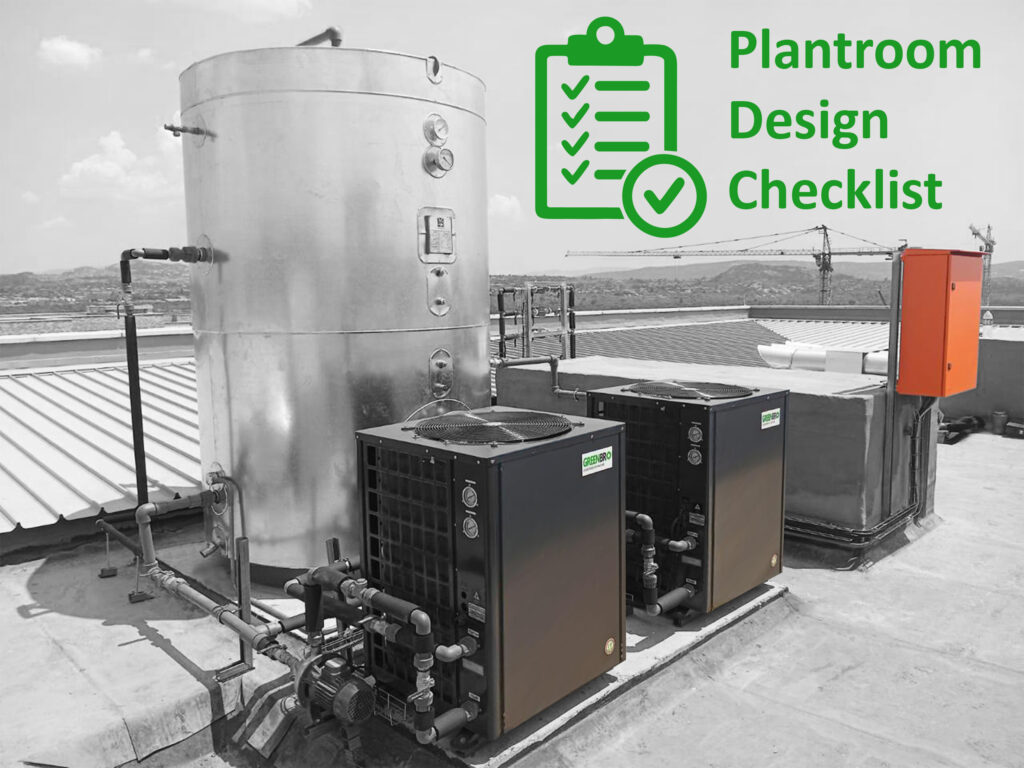
A good plant room is safe, reliable, efficient, and easy to maintain. In hotels, that means fast recovery and hot water on demand. In hospitals, uptime comes first, often with N+1 redundancy, where a backup unit keeps the system running if another part of the system fails.
In South Africa, it’s essential to plan for other factors such as loadshedding, time-of-use (TOU) electricity tariffs, where power is cheaper off-peak and more expensive during peak hours, and ever-changing municipal water pressure.
The best way to ensure your plant room is up to standard is with a comprehensive design checklist. Fortunately, we’ve got you covered. Our checklist will help you to brief consultants, align your contractors, and avoid costly rework later.
The Core Principles: What Makes A Good Plant Room?
When you’re designing your plant room, you’ll need to design with long-term performance in mind rather than only considering the cheapest upfront price.
Ideally, you’ll also want to plan for:
- Resilience
- Using N+1 redundancy where critical equipment needs a backup
- Compliance with South African National Building Regulations
- Allowing enough space for safe access to your system and any necessary maintenance
Once these fundamentals are in place, you’ll have a plant room with lower running costs, fewer breakdowns, and a system that is easier to operate and upgrade over time.
South African Design Considerations
It’s essential to remember that for facilities operating within South Africa, there are also specific design considerations for plant rooms. These include:
- Loadshedding resilience
- Water security and accumulator planning
- Local compliance references (SANS, OHS, municipal bylaws)
- Legionella temperature and hygiene awareness
- Tariff-based cost exposure and load shifting.
Step-By-Step Plant Room Design Checklist
1. Assess Your Hot-Water Demand
First, map how much hot water your facility needs and when it needs it. Focus on factors such as:
- Peak periods: The times of day when your demand for hot water is the highest. For example, hotel mornings or shift changes in hospital settings
- Total daily hot-water volume: How many litres or MWh you use in 24 hours
- Incoming water temperature: Remember, colder inlet water needs more energy to heat
- Set-points: This is the ideal hot water temperature you want to target. For instance, you may want to aim for 55 – 60°C for Domestic Hot Water (DHW)
Having a straightforward profile of your hot water demands will help prevent you from having an oversized system, overspending, or having unstable system performance.
Don’t know how to accurately assess your demand? Contact us, and one of our Greenbro mechanical plantroom specialists can help.
2. Plan for Redundancy and Risk
Next, you’ll want to decide which areas of the facility cannot be without hot water. Then, apply N+1 redundancy (having one backup source for every essential component) to those loads. This typically includes:
- Duty or standby pumps
- A backup heat source, such as an electric heating element or second heat pump
- Generator load priorities so the right equipment stays on during loadshedding
Having a backup unit will keep your system up and running through maintenance and power interruptions.
3. Select the Right Heat Source
Your plant room and its overall design will depend on the type of heat system you pick. So, be sure to choose the best fit for your building.
- Heat pump: These systems are incredibly efficient for day-to-day operation and typically have lower running costs
- Electric resistance heating system: This provide a consistent and reliable source of high-temperature heat when powered. However, with an electrical energy to thermal energy ratio of 1:1 these are not the most energy efficient option.
- Hybrid: A hybrid system is the best of both heat pumps and electric resistance heating system, combining both backup and efficiency
When you’re choosing your system, ensure you consider your facility’s:
- Temperature requirements (does the site need 60°C or 80°C+?)
- Tariff windows (peak vs off-peak electricity pricing)
- Electrical capacity
- Recovery expectations (how fast the system needs to reheat after heavy use)
4. Size Storage and Accumulator Vessels
Once you’ve picked the appropriate heat source for your site, make sure to size your storage correctly. A storage or accumulator vessel (a hot-water buffer tank) will:
- Reduce stop-start cycling
- Stabilise system temperatures
- Provide a supply of hot water during peaks
- Allow for off-peak water heating, saving you money on tariffs
5. Align with Compliance and Safety Requirements
Lastly, you’ll want to check that your design meets all of the relevant safety and compliance standards, including:
- SANS standards, specifically SANS 10400
- Municipal bylaws
- Ventilation and flue requirements
- Pressure-relief and backflow prevention
- Fire-safety provisions
Always put safety first. Your facility’s compliance protects people, equipment, and even insurance outcomes. Plus, it prevents expensive reworks later.
If you want to ensure your plant room is up to regulation, be sure to reach out to one of Greenbro’s experts. We’ll help to ensure your plant room design is flawless for the ultimate peace of mind.
CTA: Book A Review
FAQs
What do you need in a plant room?
A plant room needs the equipment and support systems that produce and manage a building’s heating and hot-water supply.
At a minimum, this includes a heat source (such as a heat pump or electric heating element), storage tanks, pumps, valves, controls, and safety devices.
It also requires safe ventilation, adequate drainage, and enough space for technicians to access and maintain the equipment.
How much space should a plant room have?
A plant room should have enough space for safe access, routine maintenance, and future replacement of equipment.
As a rule of thumb, designers aim for clear working corridors, proper door widths, and unobstructed access to all major components, including pumps, valves, heat sources, and storage tanks.
If the equipment can’t be serviced or removed without dismantling the room, the space is too tight.
Do I need a backup heat source in a hotel or hospital?
Yes, most facilities need a backup heat source. Hotels benefit from a backup heat source to handle peak periods and protect guest comfort, while hospitals almost always require a backup for uptime, sterilisation needs, and patient safety.
A common approach is a hybrid setup, where a heat pump handles the everyday load and a electric resistance heating system takes over during peaks, outages, or maintenance.