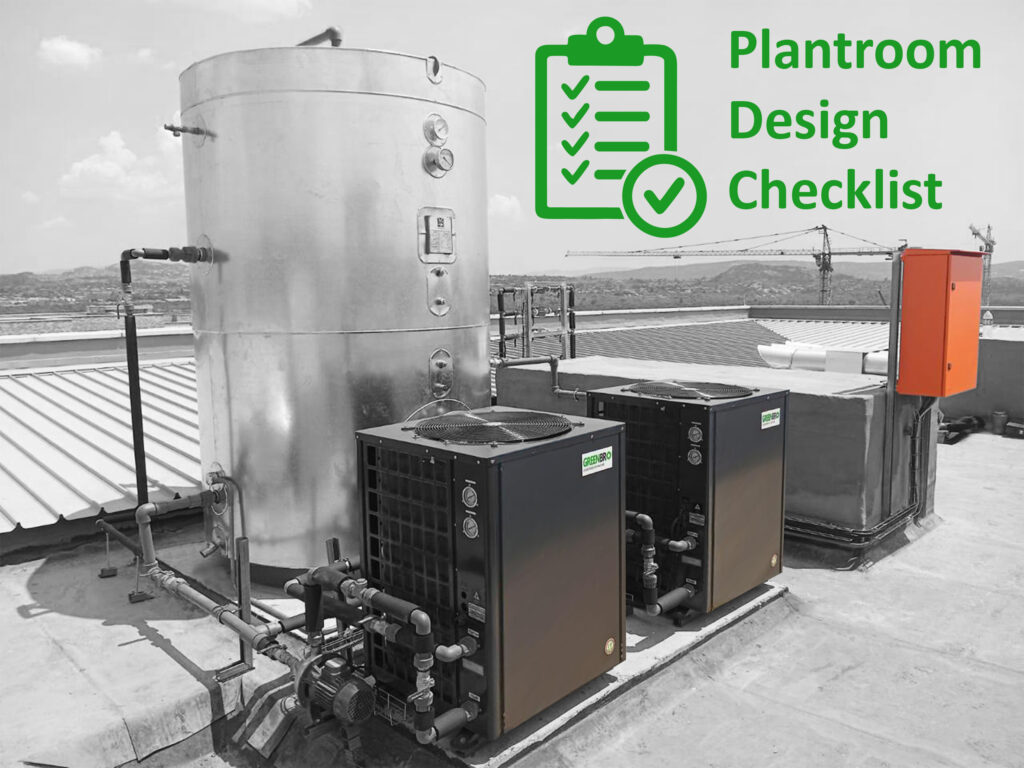
Plant Room Design Checklist | Greenbro

Plant Room Design Checklist For SA Hotels and Hospitals

Date: 24/11/2025

Published by Greenbro South Africa (Pty) Ltd 

A good plant room is safe, reliable, efficient, and easy to maintain. In hotels, that means fast recovery and hot water on demand. In hospitals, uptime comes first, often with N+1 redundancy, where a backup unit keeps the system running if another part of the system fails.

In South Africa, it’s essential to plan for other factors such as loadshedding, time-of-use (TOU) electricity tariffs, where power is cheaper off-peak and more expensive during peak hours, and ever-changing municipal water pressure. 

The best way to ensure your plant room is up to standard is with a comprehensive design checklist. Fortunately, we’ve got you covered. Our checklist will help you to brief consultants, align your contractors, and avoid costly rework later.

The Core Principles: What Makes A Good Plant Room?

When you’re designing your plant room, you’ll need to design with long-term performance in mind rather than only considering the cheapest upfront price. 

Ideally, you’ll also want to plan for:

Once these fundamentals are in place, you’ll have a plant room with lower running costs, fewer breakdowns, and a system that is easier to operate and upgrade over time.

South African Design Considerations

It’s essential to remember that for facilities operating within South Africa, there are also specific design considerations for plant rooms. These include:

  • Loadshedding resilience
  • Water security and accumulator planning
  • Local compliance references (SANS, OHS, municipal bylaws)
  • Legionella temperature and hygiene awareness
  • Tariff-based cost exposure and load shifting.

Step-By-Step Plant Room Design Checklist

1. Assess Your Hot-Water Demand

First, map how much hot water your facility needs and when it needs it. Focus on factors such as:

  • Peak periods: The times of day when your demand for hot water is the highest. For example, hotel mornings or shift changes in hospital settings
  • Total daily hot-water volume: How many litres or MWh you use in 24 hours
  • Incoming water temperature: Remember, colder inlet water needs more energy to heat
  • Set-points: This is the ideal hot water temperature you want to target. For instance, you may want to aim for 55 – 60°C for Domestic Hot Water (DHW)

Having a straightforward profile of your hot water demands will help prevent you from having an oversized system, overspending, or having unstable system performance.

Don’t know how to accurately assess your demand? Contact us, and one of our Greenbro mechanical plantroom specialists can help. 

2. Plan for Redundancy and Risk

Next, you’ll want to decide which areas of the facility cannot be without hot water. Then, apply N+1 redundancy (having one backup source for every essential component) to those loads. This typically includes:

  • Duty or standby pumps
  • A backup heat source, such as an electric heating element or second heat pump
  • Generator load priorities so the right equipment stays on during loadshedding

Having a backup unit will keep your system up and running through maintenance and power interruptions. 

3. Select the Right Heat Source

Your plant room and its overall design will depend on the type of heat system you pick. So, be sure to choose the best fit for your building. 

  • Heat pump: These systems are incredibly efficient for day-to-day operation and typically have lower running costs
  • Electric resistance heating system: This provide a consistent and reliable source of high-temperature heat when powered. However, with an electrical energy to thermal energy ratio of 1:1 these are not  the most energy efficient option.
  • Hybrid: A hybrid system is the best of both heat pumps and electric resistance heating system, combining both backup and efficiency

When you’re choosing your system, ensure you consider your facility’s:

  • Temperature requirements (does the site need 60°C or 80°C+?)
  • Tariff windows (peak vs off-peak electricity pricing)
  • Electrical capacity
  • Recovery expectations (how fast the system needs to reheat after heavy use)
 

4. Size Storage and Accumulator Vessels

Once you’ve picked the appropriate heat source for your site, make sure to size your storage correctly. A storage or accumulator vessel (a hot-water buffer tank) will:

  • Reduce stop-start cycling
  • Stabilise system temperatures
  • Provide a supply of hot water during peaks
  • Allow for off-peak water heating, saving you money on tariffs
 

5. Align with Compliance and Safety Requirements

Lastly, you’ll want to check that your design meets all of the relevant safety and compliance standards, including:

  • SANS standards, specifically SANS 10400
  • Municipal bylaws
  • Ventilation and flue requirements
  • Pressure-relief and backflow prevention
  • Fire-safety provisions

Always put safety first. Your facility’s compliance protects people, equipment, and even insurance outcomes. Plus, it prevents expensive reworks later. 

If you want to ensure your plant room is up to regulation, be sure to reach out to one of Greenbro’s experts. We’ll help to ensure your plant room design is flawless for the ultimate peace of mind.

CTA: Book A Review


FAQs

What do you need in a plant room?

A plant room needs the equipment and support systems that produce and manage a building’s heating and hot-water supply. 

At a minimum, this includes a heat source (such as a heat pump or electric heating element), storage tanks, pumps, valves, controls, and safety devices. 

It also requires safe ventilation, adequate drainage, and enough space for technicians to access and maintain the equipment.

How much space should a plant room have?

A plant room should have enough space for safe access, routine maintenance, and future replacement of equipment. 

As a rule of thumb, designers aim for clear working corridors, proper door widths, and unobstructed access to all major components, including pumps, valves, heat sources, and storage tanks. 

If the equipment can’t be serviced or removed without dismantling the room, the space is too tight.

Do I need a backup heat source in a hotel or hospital?

Yes, most facilities need a backup heat source. Hotels benefit from a backup heat source to handle peak periods and protect guest comfort, while hospitals almost always require a backup for uptime, sterilisation needs, and patient safety. 

A common approach is a hybrid setup, where a heat pump handles the everyday load and a electric resistance heating system takes over during peaks, outages, or maintenance.

FAQs – V3 – Mechanical Hot Water Plant Efficiency & Performance

Mechanical Hot Water Plant Efficiency & Performance: The Complete Guide

Greenbro - Answering Your Mechanical Hot Water Plant Questions!

This week we cover frequintly asked questions revolving mechanical hot water plant efficiency & performance.

An efficient mechanical hot water plant saves energy, reduces costs, and improves system reliability. Whether serving a commercial building, hotel, or housing development, system optimisation is the key to achieving consistent hot water delivery while keeping running costs low.

This guide answers key technical FAQs about mechanical hot water plant efficiency and offers proven strategies for maximising performance and sustainability.

At Greenbro, we don’t just install and maintain these systems – we educate and empower our clients to understand the technical aspects that ensure efficiency, compliance, and longevity.

Topic This Week: Efficiency & Performance.

Why Hot Water Plant Efficiency Matters

Mechanical hot water systems are one of the largest energy consumers in most commercial and residential developments, often accounting for 20–30% of total building energy consumption.

In facilities such as hospitals, hotels, universities, and apartment complexes, the demand for continuous hot water supply places significant strain on both mechanical and electrical infrastructure.

When these systems are not properly designed, maintained, or controlled, efficiency declines gradually, and the financial and operational effects can be substantial.

Rising Operational and Maintenance Costs

An inefficient hot water plant consumes excessive energy to achieve the same thermal output.

For example, a plant operating at a Coefficient of Performance (COP) of 3.0 will require 25–30% more input energy than one optimised to a COP of 4.0. Over time, this translates into thousands of rand in unnecessary utility expenses.

Additionally, fluctuating system pressure, inadequate flow rates, or improper control sequences can increase wear and tear on components such as compressors, circulation pumps, and valves, leading to higher maintenance costs and unplanned downtime.

Increased Wear on Compressors and Pumps

Frequent short cycling; where the plant repeatedly starts and stops; occurs when system volume or load control is insufficient.

This not only increases electrical demand but also accelerates mechanical fatigue on compressors, contactors, and motors. Pumps running continuously against closed valves or high static head conditions experience cavitation, seal failure, and reduced bearing life.

Over time, these operational stresses lead to premature equipment failure, higher replacement costs, and reduced overall plant reliability.

Fluctuating Temperatures and Performance Instability

Temperature instability is one of the first indicators of poor plant efficiency.
When flow rates, system pressure, or temperature sensors are not correctly balanced, the result is inconsistent hot water delivery.

This creates comfort issues in end-user applications (e.g., hotels or healthcare facilities) and operational problems in industrial processes that rely on precise water temperature control.

Thermal stratification inside poorly designed storage tanks or incorrect return line temperatures can further reduce heat exchanger performance, lowering system efficiency by up to 10–15%.

Higher Environmental Impact

Every kilowatt-hour of wasted energy increases your facility’s carbon footprint.

In South Africa, where most electricity generation still relies heavily on fossil fuels, inefficient plantrooms contribute directly to higher greenhouse gas emissions.

By optimising your plant through smart controls, improved insulation, and proper system design, you not only lower your operating costs but also align with Green Building Council South Africa (GBCSA) efficiency standards and sustainability objectives.

Efficiency Is More Than Just Energy Savings

Optimising your mechanical hot water plant isn’t simply about lowering electricity bills, it’s about creating a balanced, responsive, and resilient system.

True efficiency in a mechanical hot water plant goes beyond simply reducing energy consumption. It ensures balanced load management, so equipment operates only when needed, minimizing wasted capacity and unnecessary running time.

At the same time, it provides predictable temperature delivery, maintaining consistent thermal performance that enhances user comfort and ensures reliable operation for any process or application. Finally, efficient operation contributes to an extended equipment lifespan by reducing mechanical stress on compressors, pumps, and heat exchangers, allowing all components to function optimally for longer and reducing the need for premature replacements.

When efficiency is prioritised from design through operation, your plantroom becomes not just an energy asset, but a strategic contributor to building performance, compliance, and sustainability.

How Can I Tell If My Hot Water Plant Is Operating Efficiently?

Determining whether your hot water plant is operating efficiently involves assessing both its performance and operational patterns. A truly efficient plant runs smoothly, with minimal cycling and stable temperatures.

One key metric is the energy-to-output ratio, where well-optimized systems typically consume less than 0.25 kWh of electricity per liter of hot water produced.

Another critical indicator is the temperature differential (ΔT) between the flow and return lines; a stable ΔT, usually between 5–10°C, demonstrates effective heat transfer, while narrower differentials may signal fouling, improper flow rates, or other inefficiencies.

Frequent compressor cycling, known as short cycling, also reduces efficiency and accelerates wear, often caused by low buffer volume, poor load control, or system oversizing.

Finally, comprehensive system monitoring through smart sensors and energy meters, ideally integrated into a Building Management System (BMS), allows real-time tracking of energy use, detection of trends, and identification of performance anomalies, providing actionable insights to maintain optimal plant efficiency.

Does the Size of the Plant Affect Efficiency?

The answer is Yes, system sizing has a direct impact on efficiency and reliability.

Keep in mind that when over sizing a system, you face frequent short-cycle and running below optimal Coefficient of Performance (COP). The result is wasted energy and premature component fatigue.

With this said, when under sizing your systems, you pressure your system to operate at full capacity constantly, leading to high energy use and poor temperature stability.

Correctly designing a mechanical hot water plant requires several key engineering strategies to ensure efficiency and reliability. One essential practice is conducting peak and diversity load calculations, which determine the realistic maximum demand on the system while accounting for simultaneous usage patterns, preventing oversizing or under sizing.

Another important approach is implementing a modular or staged plant configuration, where multiple smaller units operate in sequence according to actual demand, improving energy efficiency, providing redundancy, and extending equipment life. Finally, integrating Variable Speed Drives (VSDs) allows pumps and compressors to dynamically adjust their flow and load in real-time, ensuring that energy is only used when necessary, reducing mechanical stress, and maintaining consistent system performance even during variable demand conditions.

Can Modern Controls Improve Efficiency?

Absolutely yes. Smart controls and automation are among the most effective ways to enhance the efficiency and performance of a mechanical hot water plant. There are a few ways in which you can implement these controls to be beneficial for your organization.

Amongst these are demand-based modulation which allows the system to adjust heating output in real-time according to the actual hot water demand. Ny doing this you can ensure energy is only used when required, which prevents unnecessary runtime.

Controls such as weather compensation, further improves efficiency by automatically adjusting supply temperatures based on ambient conditions, which optimizes part-load performance and reduces energy consumption during milder periods.

Sequential control can be implemented to manage multiple units in a modular plant, rotating their operation to balance runtime, reduce wear on individual units, and maintain consistent delivery without overloading any single system component.

Tariff optimization is another critical strategy, where the plant reduces operation during peak electricity periods and maximizes off-peak usage, lowering operating costs without impacting performance.

Finally, remote monitoring through cloud-based dashboards or a Building Management System (BMS) provides real-time analytics, early fault detection, and actionable performance insights, allowing operators to respond proactively before minor issues escalate.

When these control strategies are properly configured, they can collectively deliver significant savings.

Does My Hot Water Plant Require Frequent Maintenance to Run Efficiently?

Maintenance is a must! Regular preventative maintenance is essential to keep a mechanical hot water plant operating efficiently, safely, and reliably.

A recommended maintenance routine typically includes quarterly inspections to check sensors, valves, and system pressures, ensuring all components function correctly.

Annual maintenance is of utmost importance, and should involve cleaning heat exchangers, evaporator coils, pumps, and strainers to prevent scale or debris buildup that can reduce efficiency.

Additionally, insulation checks are important, as poorly insulated pipes and vessels can waste 2–5% of total system energy. Then lastly, testing expansion vessel and safety valves ensures pressure integrity and operational safety.

Implementing a Planned Preventative Maintenance (PPM) schedule not only maintains optimal efficiency but also allows technicians to identify potential issues early, preventing costly breakdowns and extending the lifespan of the plant.

Frequently Asked Quations

1.  What factors most impact hot water plant performance?

System design, load management, and component quality all influence performance. Properly balancing flow rates, pressures, and storage temperatures ensures consistent hot water delivery and prevents energy waste.

2. How can I reduce my plant’s environmental footprint?

Optimising energy efficiency through smart controls, insulation improvements, and demand-based operation lowers electricity consumption and reduces greenhouse gas emissions.

3. Is it worth upgrading an older hot water plant?

Yes. Retrofitting with modern controls, VSDs, or modular units can improve efficiency, reduce maintenance costs, and extend the system’s lifespan without a full replacement.

Greenbro’s Commitment

Our mission is simple: to keep your facility running with reliable, efficient, and safe hot water solutions. Whether you need a brand-new installation, scheduled maintenance, or emergency support, our team is here to deliver expertise you can trust.

For expert plantroom design, performance analysis, or upgrades, contact Greenbro South Africa, your trusted partner in mechanical hot water efficiency and performance.

Date: 13/11/2025

Published by Karen Potgieter | Greenbro South Africa (Pty) Ltd 

Heat Pumps Vs Electric Resistance Heating Systems | GreenBro
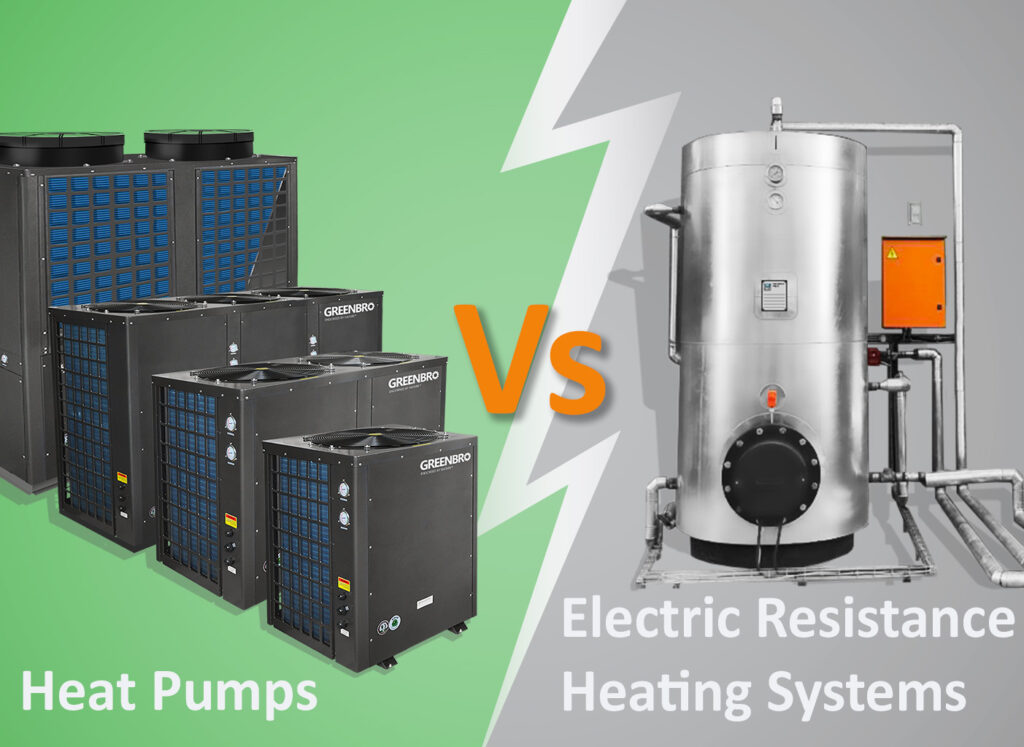
Commercial Heat Pump Vs Electric Resistance Heating Systems: Best Choice For SA Facilities

Date: 07/11/2025

Published by Greenbro South Africa (Pty) Ltd 

Choosing between a commercial heat pump and an electric resistance heating system can be complicated, especially with rising energy costs, load shedding, and sustainability targets. With South Africa’s rising tariffs, load shedding, and sustainability pressures, your hot-water choice has long-term consequences.

In most South African facilities, heat pumps are more cost-effective to run and better for reducing emissions. However, hot water storage vessels with standard electric resistance heating elements are a reliable source of heating and can produce higher temperatures. Although they are initially inexpensive, their overall operational cost in terms of energy consumption is more significant than heat pumps.

To ensure you’re making the right decision for your facility, it’s important to first understand how these two heating technologies compare. In this guide, we’ll break down heat pump vs electric resistance heating systems’ performance using real-world insights. That way, you’ll be able to make a more confident and informed decision.

Heat Pump Vs Electric Resistance Heating (ERH) Systems: Which Is Better?

There’s no single winner in the debate over a heat pump vs an electric resistance heating system. Usually, heat pumps are cheaper to run and, according to the International Energy Agency, much more efficient than electric resistance heating. On the other hand, ERH systems can deliver higher outlet temperatures quickly and provide a simple, low-maintenance solution with predictable performance. 

For many South African hotels and hospitals, a hybrid system offers the best balance. The heat pump handles most of the heating load efficiently, while the ERH system supports peak demand and serves as backup during maintenance or heat pump downtime. Still, but  neither of these systems can operate during power outages without an auxiliary power supply. 

It’s important to remember that the performance of your commercial heat pump depends on its operating conditions, such as the environmental temperature and its operating hours and cycles. Additionally, making the wrong choice can lock your site into years of avoidable costs and downtime.

To avoid this, let’s take a closer look at the difference between heat pumps and electric resistance heating systems and what these comparisons mean for your facility.

Heat Pumps Vs Electric Resistance Heating Systems: The Basics

A heat pump uses electricity to move heat from the air into water using the refrigeration principle. Because it transfers heat in this manner, it can deliver more energy than the electricity it consumes. This measure of energy efficiency is known as the COP (Coefficient of Performance). For example, a COP of 3.0 means the heat pump produces 3 kWh of heat for every 1 kWh of electricity used.

Electric resistance heating elements generate warmth directly by converting power into heat energy via electrical resistive heating. Their efficiency is typically a ratio of 1:1, meaning 1 kWh of electricity produces 1 kWh of heat. They perform reliably but have higher running costs compared to a high-COP heat pump when used continuously. 

In practice, heat pumps can lower your running costs and emissions when you pair them with sensible temperatures and tariff management. 

However, electrical resistance heating systems remain the practical choice for very high temperatures or simple redundancy.

For many South African facilities, a hybrid system offers the best balance. The heat pump handles day-to-day efficiency, while the ERH elements steps in for peak demand and backup.

Running Cost And Tariffs

In South Africa, electricity is billed using time-of-use (TOU) tariffs, where power is cheap during off-peak hours and expensive during peak periods. 

If your facility heats water off-peak and stores it for use later, a heat pump can operate at a much lower running cost. This approach is known as load shifting, and it’s one of the biggest cost advantages of heat pumps under Eskom’s tariffs and charges.

For standard electric resistance heating systems, the main cost driver is total energy consumption and timing. Without thermal storage or off-peak scheduling, these systems can become expensive to operate during peak-rate periods.

Maintenance And Reliability

Heat pumps have predictable maintenance requirements. These mainly involve the compressor, circulation pumps, control systems, and heat exchangers.

Hot water storage vessels with standard electric resistance elements, on the other hand, have simpler maintenance needs focused on electrical elements, thermostats, safety valves, and anode rods. While they are mechanically straightforward, poor water quality and scaling can reduce element efficiency or lifespan.

It’s essential to factor ongoing maintenance into your total lifecycle cost. This includes the full cost of ownership over your system’s lifespan, which is a key consideration for sustainability-focused facilities. 

The Green Building Council South Africa (GBCSA) provides guidance on how heating systems are typically assessed for operational efficiency and carbon impact under the Green Star framework.

Installation Complexity

When planning your heating system, installation and replacement requirements are critical factors.

Heat pumps often require additional electrical capacity, adequate space for outdoor units and condensate management.

Hot water storage vessels with standard electric resistance elements are generally easier to install and replace, as they only require electrical connections and proper safety controls. However, they should be correctly insulated and sized to meet demand efficiently.

If load shedding is a major concern for your site, a hybrid configuration can improve operational flexibility. It combines the day-to-day efficiency of a heat pump with the reliability of an ERH system for peak demand or maintenance support. However, both systems will require an alternate power source, such as a generator or solar PV with battery backup, to operate during load shedding.

Building-Type Guidance

Hotels

Hotels experience sharp peaks in hot-water demand, particularly during morning and evening shower times, as well as continuous usage in laundries, kitchens, and spas.

With thermal storage and smart controls, a heat pump system can significantly reduce operating costs while maintaining guest comfort and high water availability. Heat pumps also contribute positively to green building ratings by reducing carbon emissions.

That said, keeping your electric resistance system for peak loads and backup ensures a consistent supply and system resilience.

Hospitals

Hospitals require continuous hot water and often need higher temperatures for sterilisation. For this reason, a hybrid system is usually the safest and most reliable choice. It allows the heat pump to manage the 24/7 base load while the electric resistance system provides high-temperature capacity and N+1 redundancy during maintenance or failure.

N+1 redundancy means having one extra backup component for any critical system, ensuring uninterrupted operation.

Multi-Residential

Large residential developments have more evenly distributed hot-water demand, which suits heat pumps extremely well.

When combined with hot-water storage and off-peak controls, heat pumps deliver strong lifecycle savings over 10–15 years.

Still, if your building has limited electrical capacity, a small electric resistance heating system can provide additional capacity during demand peaks or act as a simple backup system.

Lifecycle Cost Vs Upfront Cost

Upfront costs can be misleading when selecting a heating system. A hot water storage vessel with standard electric resistance elements is cheaper to install but far more expensive to operate long term. A heat pump, while more costly upfront, often saves substantial energy and running costs month after month.

As a rule of thumb, you should always consider 10 years of the total cost, including the:

  • Energy used to power the system
  • Maintenance 
  • Part or system replacements
  • The cost and risk of potential downtime

If your site has specific Environmental, Social, and Governance (ESG) goals or certification targets, be sure to check out the GBCSA Net Zero framework. This framework   explains how lower operational emissions are calculated.

A Simple ROI Frame You Can Use

Before comparing heating systems, you need to understand your ROI (Return on Investment). This is the time it takes for your savings to pay back your upfront cost of the system itself. 

Understanding this will help to ensure you choose the option that performs best over the long term, and not just the one with the lowest installation price.

1. Establish the Baseline

Start by measuring how much electricity your existing hot-water system uses today. Then compare that usage to the current time-of-use (TOU) tariff periods. 

Keep in mind that peak rates (not total consumption) are often what contribute to your energy bill. 

This is the most important step in calculating your ROI, and can ultimately make or break your decision on which heating system to choose. So, if you need help interpreting your bills, be sure to contact GreenBro, and one of our experts will guide you through it.

2. Model a Heat Pump Option

Next, compare how a heat pump, an electric resistance heating system or a hybrid setup would perform in your building. You should be sure to use realistic operating temperatures rather than brochure figures, because a system’s efficiency changes in real-world conditions. 

Additionally, if your site has big spikes in demand, it’s wise to include an accumulator vessel (a storage tank that stores or holds hot water) to reduce stop-start cycling and take advantage of cheaper off-peak electricity tariffs.

3. Add Controls and Maintenance

The next thing you’ll need to consider for your overall ROI is smart controls. Controls help you save money by running equipment at the right time, reducing waste and preventing systems from working harder than they need to. 

Of course, you can’t forget about system maintenance to keep things running smoothly. Regular maintenance will keep the performance of your system steady and prevent expensive breakdowns. Keep in mind that your hot-water system should also be included in your building’s overall maintenance plan.

ROI Example

Let’s assume your building needs 1,000 MWh of hot water per year:

  • A standard ERH system (COP = 1.0) would require about 1,000 MWh of electricity input.
  • A heat pump with a COP of 3.0 would need only 333 MWh of electricity.

Now let’s compare the running costs:

  • At R2.30/kWh, the heat pump would save roughly R1.54 million per year in energy costs.
  • Add ± R80 000 in maintenance savings, and the total annual savings are about R1.62 million.

If the heat pump costs R1 000 000 more to install, the simple payback period is about 0.6 years (7 – 8 months).

In real projects, you’ll need to remember to check the relevant demand charges, winter COP at high set-points, and run a ± 20% sensitivity on tariffs and COP before you can accurately assess your ROI.

If you’d like a GreenBro expert to help you explore your options or build a cost model, don’t hesitate to contact our team today.

Call To Action: Request A Costed Proposal.

FAQs

Can I keep my electric resistance elements as backup?

Yes, you can keep your electric resistance elements as backup. In most cases, it’s a very smart decision. Many facilities run a heat pump for the base load and rely on their electric resistance elements for backup.

Do I need an accumulator vessel with a heat pump?

Although it is recommended, having an accumulator vessel is not a requirement for a heat pump. An accumulator vessel stabilises system temperature, reduces compressor cycling, and allows you to run heating cycles during off-peak tariff periods for maximum efficiency.

FAQs – V2 – Mechanical Hot Water Plant Equipment & Components

Mechanical Hot Water Plant Equipment & Components FAQs - Answered by Greenbro

Greenbro - Answering Your Mechanical Hot Water Plant Questions!

This week we cover frequintly asked questions revolving mechanical hot water plant equipment & components.

When it comes to mechanical hot water plants, every component plays a crucial role in maintaining the overall performance and reliability of the system. These systems are more than just installations — they are precision-engineered environments designed to generate, store, and distribute hot water safely and efficiently. Each element has a defined function: heat pumps provide the thermal energy, hot water storage vessels balance supply and demand, circulation pumps maintain consistent flow and temperature.

Supporting components such as valves, insulation, and pipework ensure operational safety, compliance, and maintenance accessibility. When integrated correctly, these elements work together to create a SANS-compliant, energy-efficient system that delivers consistent hot water while optimising performance and lifespan.

Even one incorrectly specified or poorly installed component can undermine the entire operation — increasing energy consumption, shortening equipment life, and compromising safety. That’s why expert plantroom design, equipment selection, and system balancing are essential to achieving optimal efficiency, reliability, and long-term sustainability in every project.

At Greenbro, we don’t just install and maintain these systems – we educate and empower our clients to understand the technical aspects that ensure efficiency, compliance, and longevity.

Topic This Week: Equipment & Components

Frequently Asked Quations

1. What core equipment is required in a plantroom?

A mechanical hot water plant consists of key components that ensure safe, reliable, and energy-efficient operation.

Every plantroom setup is different, but most centralised hot water systems include:

  • Primary heating source – heat pumps or elements sized for daily demand and peak loads.
  • Hot water storage vessels – to handle periods of high demand.
  • Circulation pumps – to ensure consistent flow and temperature balance.
  • Pipework, valves, and fittings – for safe distribution, isolation, and control.

The right combination depends on the application: student residences, hotels, hospitals, or premium residential developments. Importantly, systems must comply with South African National Standards (SANS) water-use bylaws.

2. How do heat pumps work in a mechanical hot water plant?

Heat pumps are the core energy source in most mechanical hot water plantrooms, designed to efficiently transfer heat from the surrounding air, water, or ground into the system for water heating and distribution. Using advanced refrigeration technology, heat pumps circulate refrigerant through a continuous evaporation and condensation cycle, absorbing ambient heat and converting it into usable thermal energy.

This process enables efficient operation even in cooler conditions, cutting energy use and running costs compared to traditional electric or gas heating methods. The heated water is then stored in steel storage vessels or Heat Accumulators, ensuring a consistent and reliable supply throughout the building. Correct sizing, installation, and maintenance of heat pumps are vital for achieving SANS-compliant, energy-efficient hot water systems in diverse applications such as hotels, hospitals, residential developments, and student accommodations.

3. What role do circulation pumps play?

In a mechanical hot water plant, circulation pumps are vital for maintaining a continuous, balanced, and energy-efficient hot water supply.

Two main types are used:

Primary circulation pumps transfer water between the heat pump and storage vessel, ensuring efficient heat recovery and meeting daily demand.
Ring main pumps maintain constant flow from the storage vessel through the distribution network—keeping even temperature and pressure across outlets in larger systems such as hotels, hospitals, and student accommodation.

Together, these pumps prevent temperature drops, minimise heat loss, and ensure instant hot water availability. Correct sizing and specification optimise energy efficiency, reduce system strain, and extend equipment lifespan. Proper integration of both pump types is key to a reliable, SANS-compliant hot water system.

Circulation pumps keep hot water moving through the system, which prevents heat loss, ensures instant availability at outlets, and reduces bacterial risks like Legionella. Correct pump sizing is critical:

  • Undersized pumps can cause poor flow and uneven supply.
  • Oversized pumps waste energy and cause excess wear.

Modern plantrooms often use variable-speed pumps for improved energy efficiency and system balancing.

4. What is the role of hot water storage vessels and heat accumulators in a plantroom?

In a mechanical hot water plant, hot water storage vessels and Heat Accumulators play a vital role in maintaining system balance and ensuring consistent hot water availability. Storage vessels, typically manufactured from durable steel, and Heat Accumulators, constructed from high-strength fibreglass, are designed to store heated water from the primary heat source, providing a reliable reserve during periods of peak demand.

They act as a thermal buffer between the heating source and the building’s distribution network, allowing circulation pumps to operate efficiently while maintaining stable temperature and pressure across all outlets. Correct sizing, selection, and installation of these vessels enhance energy efficiency, reduce strain on pumps, and support a dependable, SANS-compliant hot water supply for a wide range of applications — from residential developments to commercial and institutional projects.

5. What monitoring and control systems are recommended?

Modern mechanical hot water plantrooms are evolving with the integration of IoT-based controls, smart sensors, and digital monitoring dashboards designed to enhance operational efficiency and system visibility. These advanced technologies allow for real-time data tracking, remote access, and predictive maintenance, enabling facility managers to monitor performance, detect anomalies, and address inefficiencies before they escalate into costly issues.

In many large-scale installations, such as hotels, hospitals, and residential developments, plantroom equipment can also be integrated into Building Management Systems (BMS) through Modbus-compatible controls, ensuring seamless communication between devices. This level of automation not only helps optimise energy consumption and improve hot water distribution but also enhances safety and compliance by maintaining consistent pressure and temperature monitoring.

Finding a reliable supplier capable of providing and supporting these integrated monitoring solutions offers a major advantage — improving system reliability, reducing downtime, and extending equipment lifespan. As technology continues to advance, IoT-enabled systems are becoming a key component in achieving energy-efficient, SANS-compliant hot water plantrooms built for long-term performance.

6. How does mechanical hot water plant design affect efficiency?

A well-designed mechanical hot water plant ensures that all key components — including heat pumps, hot water storage vessels, Heat Accumulators, circulation pumps, and valves — are strategically positioned to minimise heat loss, optimise water flow, and allow safe, easy access for ongoing maintenance. Proper layout and component selection play a major role in enhancing energy efficiency, improving system balance, and ensuring stable temperature control throughout the distribution network.

Thoughtful plantroom design also supports system redundancy, allowing backup equipment to take over in the event of a failure, which is essential for maintaining continuous hot water supply in high-demand facilities such as hotels, hospitals, and residential developments. By prioritising accessibility, safety, and performance, a well-designed plantroom extends the lifespan of all equipment and helps maintain full SANS compliance, ensuring long-term reliability and operational efficiency.

Greenbro’s Commitment

Our mission is simple: to keep your facility running with reliable, efficient, and safe hot water solutions. Whether you need a brand-new installation, scheduled maintenance, or emergency support, our team is here to deliver expertise you can trust.

Date: 09/10/2025

Published by Karen Potgieter | Greenbro South Africa (Pty) Ltd 

Understanding Mechanical Hot Water Pantroom Design and Sizing

Understanding Mechanical Hot Water Plant Design, Sizing & Safety FAQs - Answered by Greenbro

Greenbro - Answering Your Mechanical Hot Water Plant Questions!

Covering the design, sizing and saftey requirements of mechanical hot water plantrooms, including heat pump equipment, circulation pumps to storage vessels and hot water plant piping.

At Greenbro, we know that mechanical hot water plant solutions are vital for residential estates, hotels, hospitals, commercial buildings and many more.

Mechanical hot water plantrooms are the backbone of reliable a hot water supply system. Reliable hot water is not just a convenience – it’s essential for smooth daily operations.

At Greenbro, we don’t just install and maintain these systems – we educate and empower our clients to understand the technical aspects that ensure efficiency, compliance, and longevity.

Topic This Week: Design & Sizing

Frequently Asked Quations

1. How do I calculate the correct hot water plant size for my building?

A mechanical hot water plant must accommodate all equipment while allowing sufficient clearance for maintenance and airflow. For example, a medium-sized student accommodation may require 12–15m², while a hotel plantroom could exceed 25m². South African SANS regulations provide guidance on space allocations per building type.

2. How do I calculate the heat pump and storage vessel size required?

The sizing of heat pumps and storage vessels is primarily determined by a combination of factors that ensure reliable and efficient operation. Key considerations include the daily hot water demand, which dictates the overall capacity required, as well as peak load profiles, which highlight the periods of highest consumption. Recovery times are also critical, as they indicate how quickly the system can restore hot water after heavy usage. Additionally, system redundancy requirements—ensuring backup capacity in case of equipment downtime—must be factored in.

Selecting units that are either oversized or undersized can have significant consequences, potentially leading to energy inefficiencies, increased operational costs, or insufficient hot water supply during peak periods. Properly engineered sizing ensures optimal performance, reliability, and long-term cost-effectiveness.

Key considerations: daily hot water demand, peak usage times, recovery rates, and redundancy.

Example:

  • Daily hot water demand: 3,000 liters

  • Desired storage temperature: 60°C

  • Heat pump COP: 4.0

  • Required storage vessel: 3,000 liters

  • Heat pump capacity: 30 kW (based on peak load and recovery time)

3. How do I calculate the required pipe size for my hot water plant?

In a mechanical hot water plant, pipe sizing is determined by the required flow rates for heat pumps and storage vessels, the acceptable water velocity within the system, and the friction losses caused by fittings, valves, and pipe lengths.

Properly sized pipes ensure efficient heat transfer, maintain optimal circulation, and prevent excessive pressure drops that can compromise pump performance or system efficiency. Undersized pipes can lead to reduced flow and increased energy use, while oversized pipes may increase material costs and reduce system responsiveness. Correct pipe sizing is therefore essential to ensure the plant operates reliably, safely, and efficiently.

Pipe diameters must handle flow rates without excessive friction loss.

Example:

  • Peak flow rate: 20 liters/min

  • Velocity limit: 1.5 m/s

  • Required pipe diameter ≈ 25mm

4. How do I calculate the correct circulation pump size?

Calculating the correct circulation pump size for a mechanical hot water plant requires a detailed understanding of the system’s flow and pressure requirements. The pump must be capable of delivering the required flow rate to circulate hot water between the heat pumps, storage vessels, and distribution points while overcoming the total system resistance caused by pipe friction, valves, fittings, and other components.

Key factors include:

  • System Flow Rate: The volume of hot water that needs to circulate per hour, based on building demand and peak usage periods.

  • Total Head/Pressure Requirements: The pressure needed to overcome resistance in the pipework, valves, and other hydraulic components to maintain consistent flow.

  • Pump Efficiency: Selecting a pump that operates near its optimal efficiency point reduces energy consumption and operational costs.

  • Redundancy and Reliability: In critical applications such as hotels, hospitals, or student accommodations, pumps may be slightly oversized or paired with backup units to ensure uninterrupted hot water supply.

Proper pump sizing ensures the hot water plant delivers reliable hot water at the correct temperature, minimizes energy use, reduces wear on equipment, and maintains system longevity.

Pump sizing depends on system pressure drop and flow rate.

Example:

  • Flow rate: 20 L/min

  • Total head: 10 meters

  • Pump power: 0.37 kW (selected from pump curve for efficiency)

5. How much space do we need for the hot water plant?

When planning the layout of a mechanical hot water plant, it is essential to allocate sufficient space not only for the installation of heat pumps, storage vessels, and circulation pumps but also for safe access and ongoing maintenance. As a guideline, allow 1–1.5 meters of clearance around major equipment to enable technicians to service components without obstruction.

The layout should also include designated areas for expansion vessels, control valves, safety devices, and monitoring systems to ensure compliance with SANS regulations and industry best practices. Additionally, adequate space must be reserved for ventilation, electrical panels, and future expansion, preventing overcrowding and ensuring the hot water plant remains safe, efficient, and adaptable throughout its lifecycle.

6. What safety features are required?

6.1. Safety In Pressurised Systems: 

Safety is a critical aspect of any mechanical hot water plant, as these systems operate under pressure and at elevated temperatures. To protect both the equipment and occupants of the building, several safety features must be integrated into the design.

  • Pressure Relief Valves: Prevent excessive pressure buildup within the system by releasing water safely when pressure exceeds the design limits.

  • Expansion Vessels: Absorb the natural expansion of water as it heats up, reducing strain on pipes, vessels, and fittings.

  • Leak Detection Sensors: Provide early warning of leaks, helping to prevent water damage, energy loss, and potential safety hazards.

  • Over-Temperature Protection: Ensures the system automatically shuts down or limits operation if water temperatures rise above safe thresholds.

  • Electrical and Mechanical Compliance (SANS): All equipment and installations must adhere to South African National Standards (SANS) regulations, covering electrical wiring, earthing, mechanical fittings, and safety clearances.

In addition to these features, your hot water plant should incorporate clear labeling, isolation valves for emergency shutdown, and adequate ventilation. Compliance with SANS regulations not only ensures safety but also guarantees system reliability and legal adherence.

6.2. Safety Features of Non-Pressurised Hot Water Systems

In a non-pressurised (open vented) hot water system, water is not contained under pressure; instead, the system is open to atmosphere. This reduces some of the risks associated with pressurised systems but does not remove the need for safety features.

Key safety features include:

  • Open Vent / Overflow Pipe: Allows expanded water to safely discharge into a header tank or drain, preventing pressure build-up.

  • Temperature Control & Over-Temperature Protection: Thermostats and thermal cut-outs prevent overheating and protect against scalding risks.

  • Low Water Cut-Off (Level Protection): Ensures that heat pumps or pumps switch off if water levels drop too low, protecting elements and heat exchangers from dry-firing damage.

  • Isolation Valves: For safe shutdown and maintenance without draining the entire system.

  • Backflow Prevention: Non-return valves or air gaps to prevent contamination of the potable water supply.

  • Adequate Ventilation & Drainage: Prevents heat buildup and allows safe removal of any spillage or overflow.

  • Electrical Compliance (SANS): All electrical connections, earthing, and control systems must comply with South African National Standards.

Greenbro’s Commitment

Our mission is simple: to keep your facility running with reliable, efficient, and safe hot water solutions. Whether you need a brand-new installation, scheduled maintenance, or emergency support, our team is here to deliver expertise you can trust.

Date: 02/10/2025

Published by Karen Potgieter | Greenbro South Africa (Pty) Ltd