Accumulator Vessels For SA Plant Rooms: Sizing And Savings Explained
Date: 02/12/2025
Published by Greenbro South Africa (Pty) Ltd
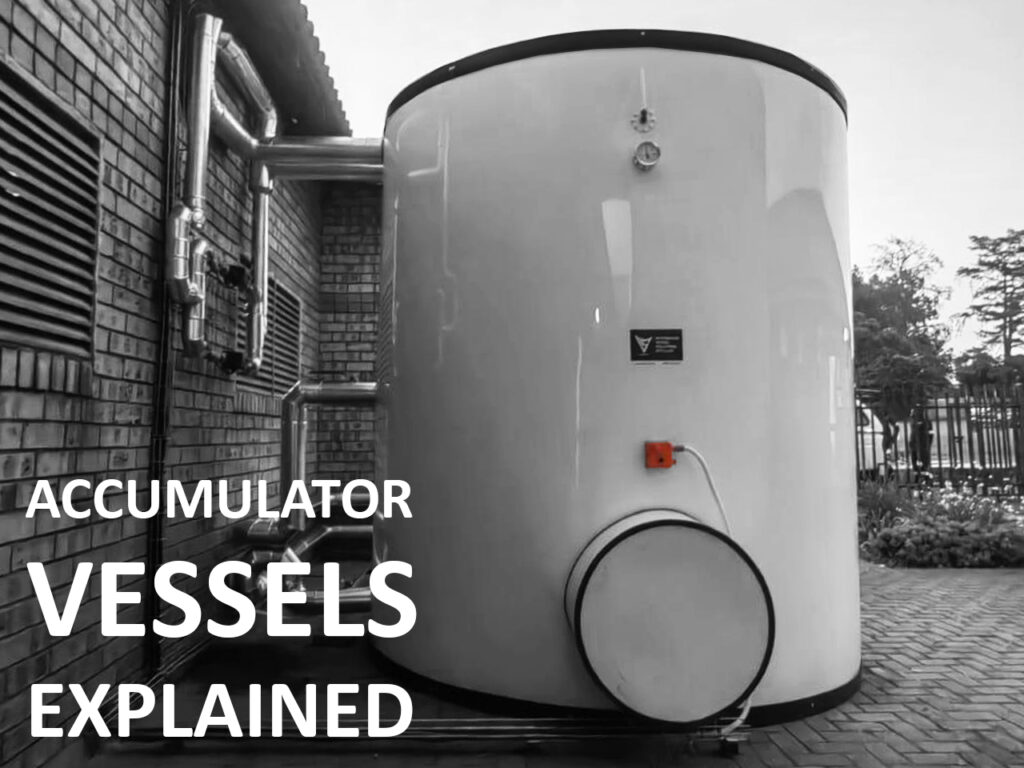
An accumulator (buffer) vessel plays a vital role in commercial hot-water systems. This is especially true in hotels and hospitals, where reliability is non-negotiable.
By storing heated water and stabilising system flow, they can effectively reduce equipment cycling, improve efficiency, and help plant rooms cope with peak demand and changing load conditions.
In South Africa, these benefits go even further. With loadshedding and time-of-use (TOU) tariffs from utilities like Eskom, accumulator vessels help systems run during off-peak hours and remain stable when power is unexpectedly interrupted.
What An Accumulator Vessel Does
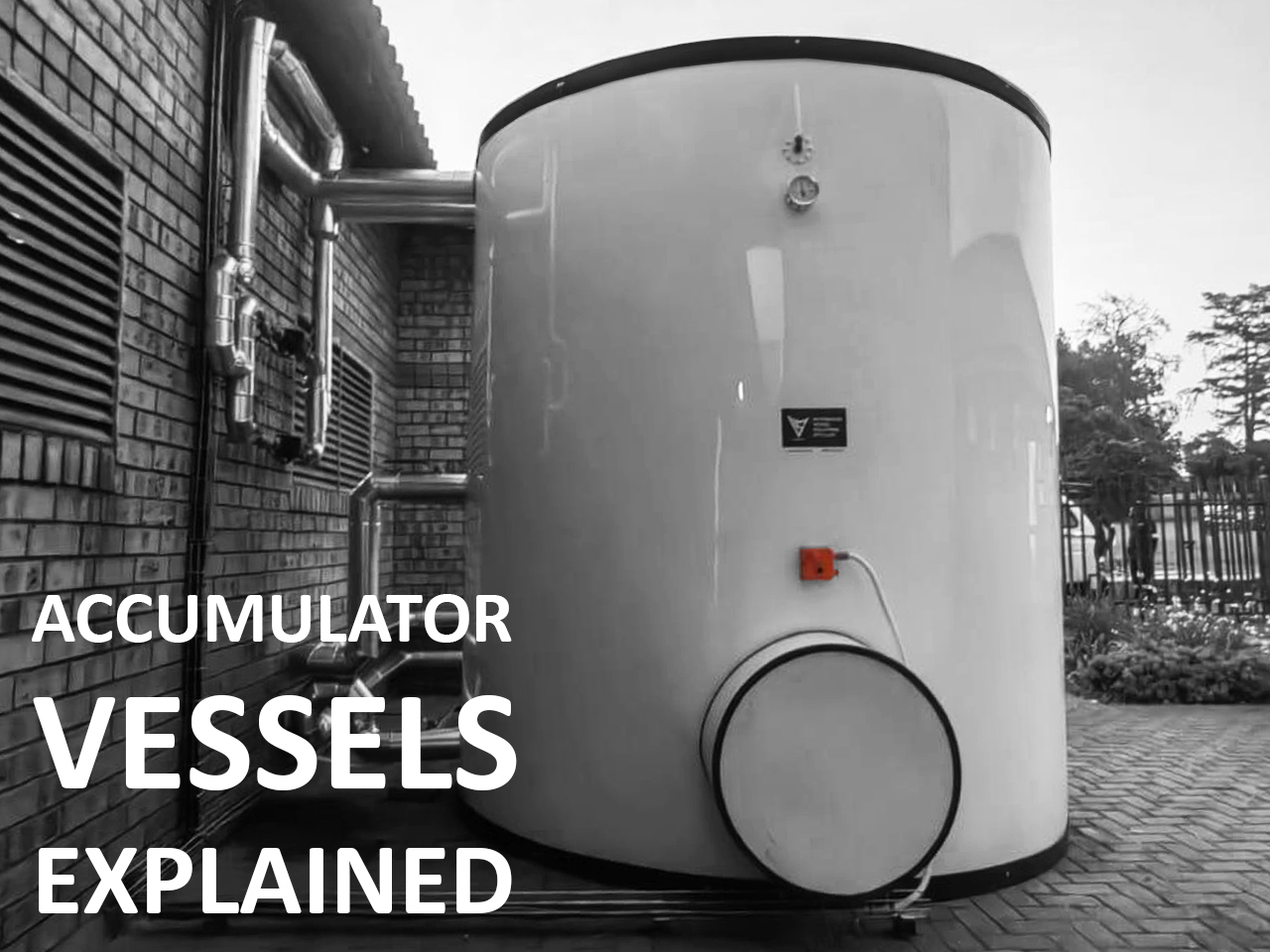
An accumulator vessel is a non-pressurised hot-water buffer tank that sits between the heat source and the demand. It acts as a kind of middleman between the hot water system and where the water is being deployed to. Its main job is to:
- Reduce cycling by preventing constant on/off switching
- Stabilise temperatures during sudden spikes in demand
- Improve efficiency and recovery times
- Extend your hot water system’s lifespan by reducing the stress on your equipment.
For example, hotels can benefit from this during morning and evening peaks when guests shower at the same time. Similarly, hospitals benefit from improved uptime, smoother sterilisation cycles, and better resilience in critical environments.
So, if you want consistent performance and fewer breakdowns, try exploring our accumulator vessels to improve the stability and efficiency of your existing system.
How Accumulator Vessels Reduce Cycling
Cycling happens when your water heating equipment repeatedly switches on and off to keep up with the demand for hot water. Over time, this wastes a ton of energy and can wear out compressors and pumps, (which typically results in unnecessary part replacements).
An accumulator vessel helps to prevent this by storing thermal energy, thereby reducing the need for constant hot water production. As a result, it allows the system to run steadily instead of reacting to every spike in demand. Of course, this is most valuable when there are municipal water pressure changes or during loadshedding when relying on generators.
How To Size Accumulator Vessels
The right size depends on your:
- Peak hot-water demand
- Target temperature (or set-point)
- Heat source type (heat pump, electric heating systems, or hybrid)
- Recovery speed required
When you’re sizing your vessel, a simple rule of thumb is to size for around 30 minutes of peak demand, or follow a litres-per-kW guideline based on your system output.
For example, a hotel with high simultaneous demand will probably need a bigger vessel than a residential block with staggered hot water use.
Common Mistakes To Avoid When Choosing A Heat Accumulator
If you’re unsure of what size vessel your specific site needs, it’s important to contact a professional. Otherwise, you may end up making one of these common mistakes:
- Undersizing or oversizing the vessel
- Having poor insulation or an incorrect pipe layout, which leads to heat loss
- Having no integration with controls like sensors
- Forgetting to factor in future maintenance access
- Ignoring TOU tariffs and loadshedding realities
To prevent these issues from affecting your hot water system, be sure to book our maintenance services to prevent breakdowns and reduce costs over your system’s lifecycle.
Final Takeaway
Accumulator vessels make commercial hot water systems more stable, efficient, and resilient – especially in demanding facilities like hotels and hospitals. Luckily, with the right size and setup, you’ll reduce cycling, lower your running costs, and extend the lifespan of your hot water system.
If you’d like help sizing or reviewing your current system, our team of experts is ready to assist.
CTA: Speak To An Engineer
FAQs
What does an accumulator vessel do?
An accumulator vessel stores heated water or more specifically thermal energy, which is generated by the heating source. The accumulator contains a series of stainless-steel corrugated tubes internally that will be connected to your buildings main cold-water supply. On demand of hot water, the cold water passes through the coils absorbing the thermal energy along the way from the stored hot water known as the battery.
How do you size an accumulator vessel?
To get an accurate size for your accumulator vessel, you will need to consider certain factors. These include thermal storage size, peak demand, temperature set-points, system output, and recovery speed. Generally, it’s recommended to size for at least 30 minutes of peak usage.
Do all plant rooms need an accumulator vessel?
No, not all plant rooms need an accumulator vessel. However, it is an optimal replacement to conventional hot water pressurized storage tanks and most commercial systems with changing hot water demands can benefit from one if they require a steady supply and reliable recovery.