The Latest News & Resources

mechanical plantroom resources

Stay in the Know

Follow our news section for the latest updates

Greenbro EGB Advantage

Discover the Greenbro EGB Advantage With a focus on sustainability, performance, and long-term reliability, the EGB range is fast becoming a preferred solution among leading

Read More »

Winter – Maintenance Reminder

Winter – Maintenance Reminder Factors to take in concideration when maintenance is not conducted. Increased energy consumption and bills Inconsistent hot water supply Premature equipment

Read More »

Answers to all your questions

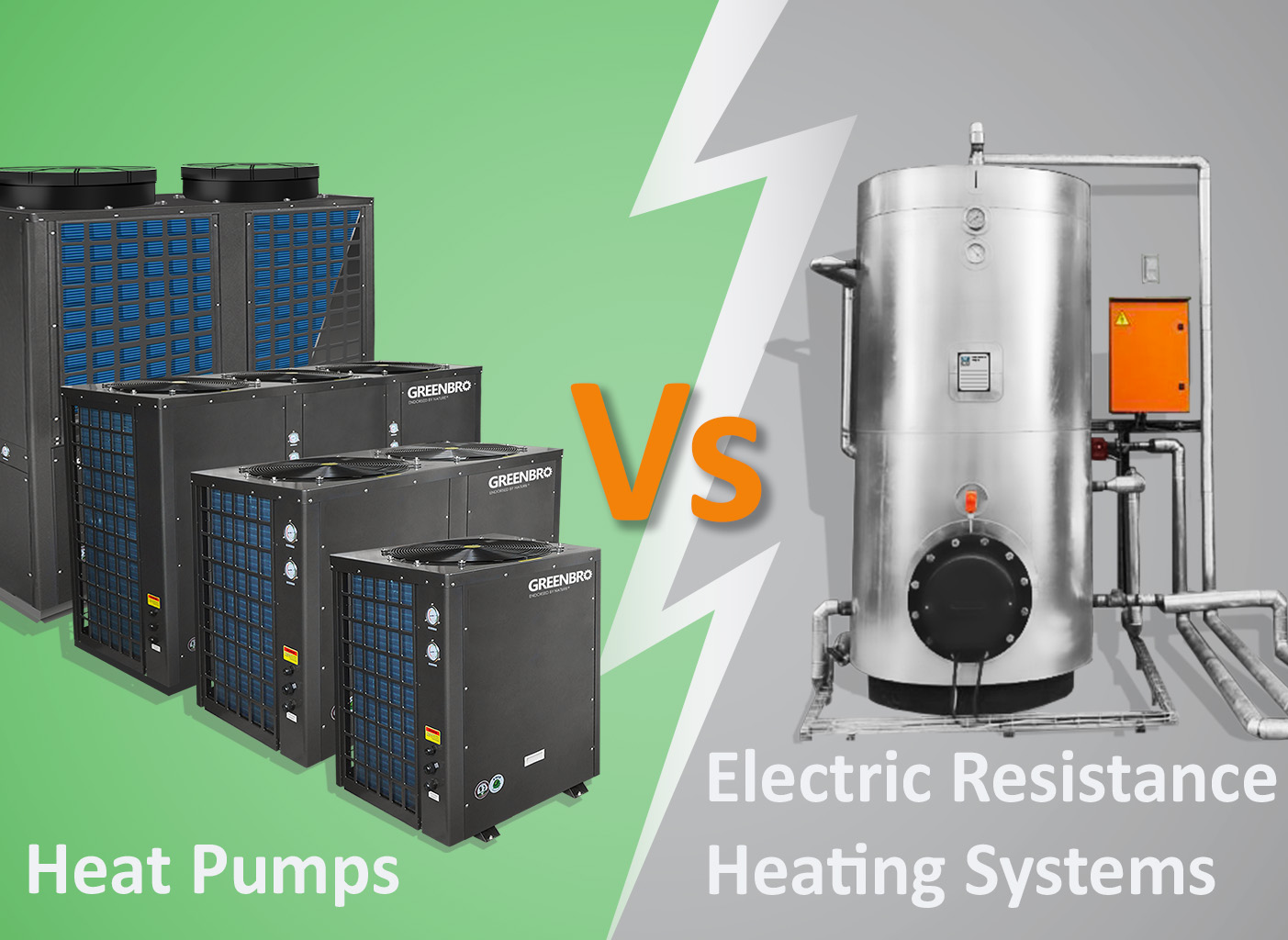
Yes, you can keep your electric resistance elements as backup. In most cases, it’s a very smart decision. Many facilities run a heat pump for the base load and rely on their electric resistance elements for backup.

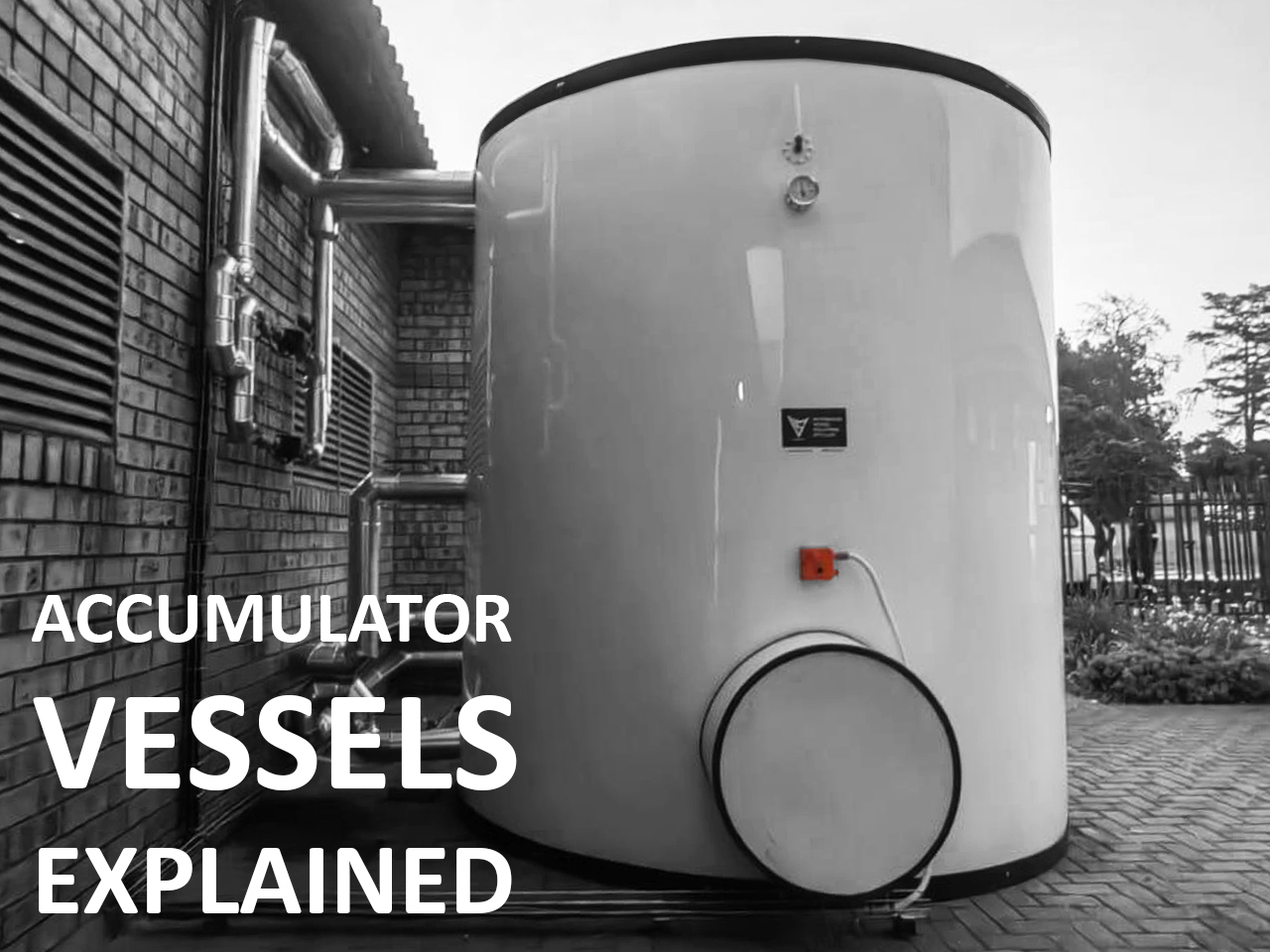
Although it is recommended, having an accumulator vessel is not a requirement for a heat pump. An accumulator vessel stabilises system temperature, reduces compressor cycling, and allows you to run heating cycles during off-peak tariff periods for maximum efficiency.

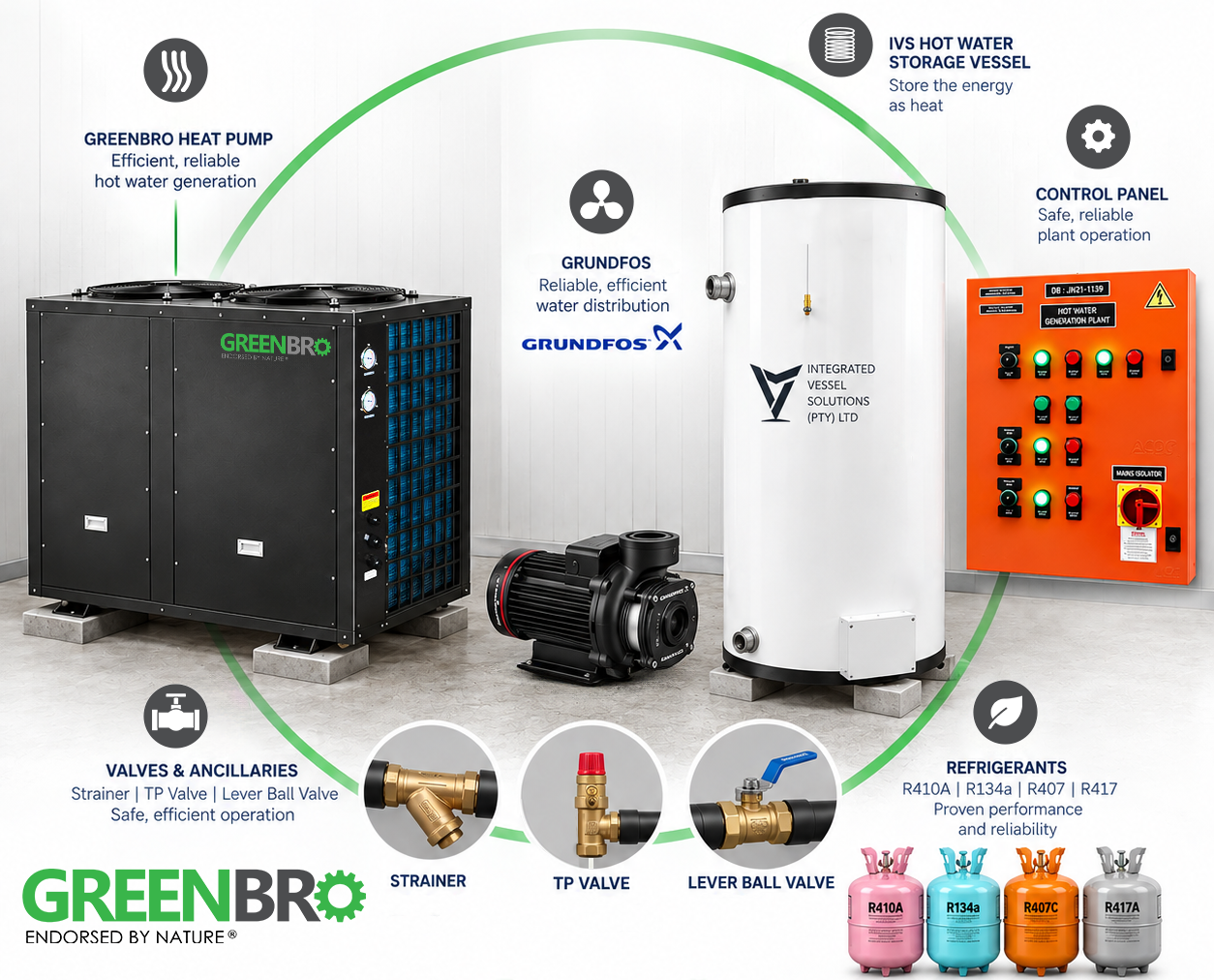
A mechanical hot water plant consists of key components that ensure safe, reliable, and energy-efficient operation.


Most systems include:

  • Primary heating source: heat pumps or elements sized for daily and peak demand
  • Hot water storage vessels
  • Circulation pumps
  • Pipework, valves, fittings


The combination varies by application (residences, hotels, hospitals, student housing) but must comply with SANS water-use bylaws.

Heat pumps use a refrigeration cycle to absorb ambient heat and convert it into usable thermal energy, heating water efficiently even in cooler climates. The heated water is stored in steel vessels or Heat Accumulators for stable supply. Correct sizing, installation, and maintenance are essential for SANS-compliant, efficient systems.

Circulation pumps maintain consistent temperature and flow throughout the system.


Types:

  • Primary pumps: move water between heat pump and storage
  • Ring-main pumps: maintain stable distribution through the building


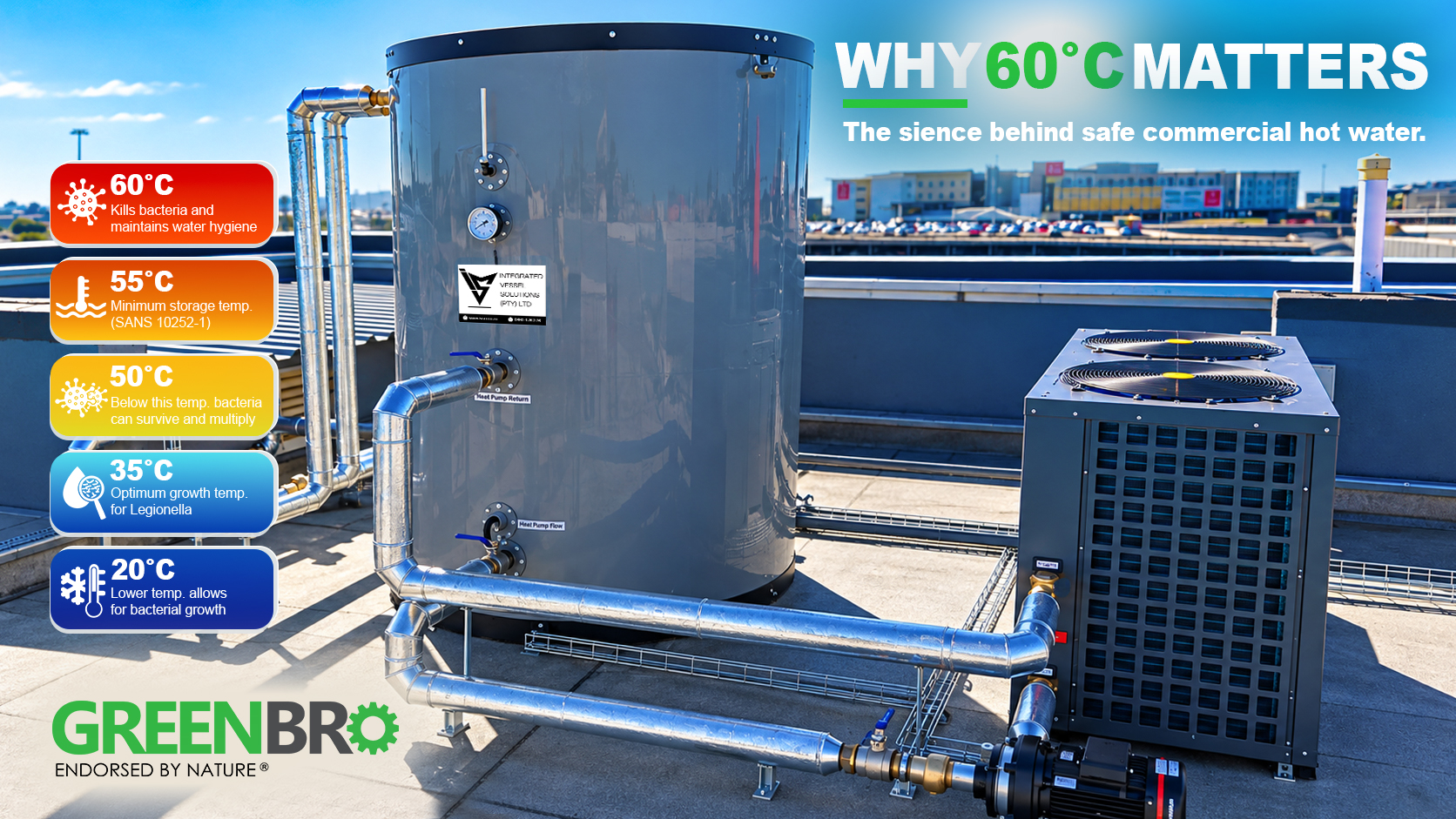
Correct sizing prevents heat loss, improves efficiency, and avoids issues like Legionella risk.

Performance is mainly influenced by:

  • system design
  • load management
  • component quality
  • correct flow, pressure, and temperature control


Good balancing prevents energy waste and ensures stable hot water supply.

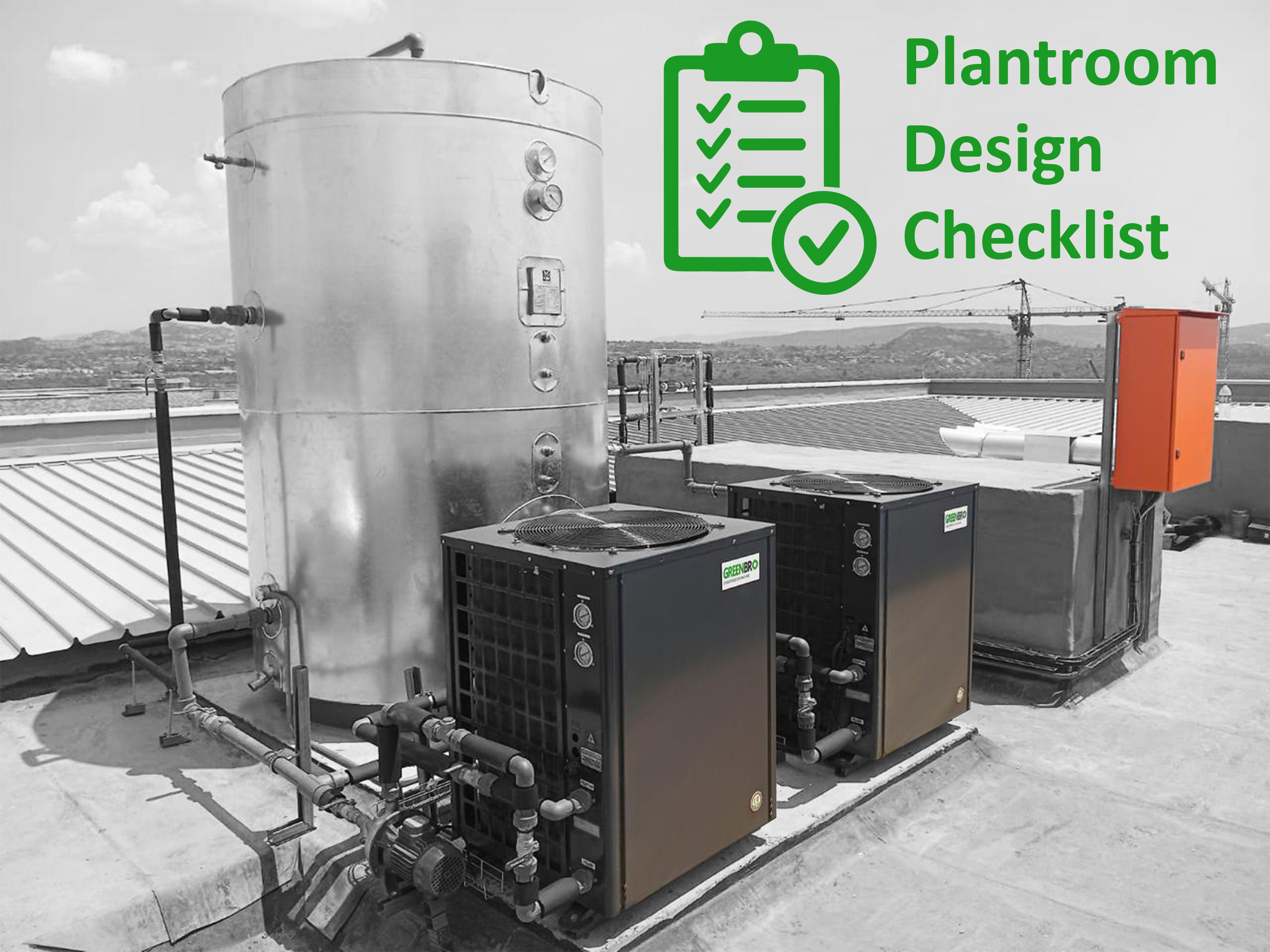
Efficiency depends on strategic layout of heat pumps, vessels, accumulators, circulation pumps, and valves to minimise heat loss and support maintenance access.


Good design:

  • improves system balance
  • reduces running costs
  • extends equipment lifespan
  • ensures redundancy
  • maintains SANS compliance

Mechanical hot water plants must allow space for equipment plus clearance for airflow and maintenance.

Examples:

  • Medium student accommodation: 12–15m²
  • Hotels: 25m²+
 

SANS guidelines determine space requirements per building type.


Although it is recommended, having an accumulator vessel is not a requirement for a heat pump. An accumulator vessel stabilises system temperature, reduces compressor cycling, and allows you to run heating cycles during off-peak tariff periods for maximum efficiency.

Sizing depends on:

  • daily demand
  • peak load periods
  • recovery time
  • redundancy
  • target storage temperature
  • required capacity

Example:

  • Daily demand: 3,000 L
  • Storage temp: 60°C
  • COP: 4.0
  • Required vessel: 3,000 L
  • Heat pump capacity: 30 kW

Although it is recommended, having an accumulator vessel is not a requirement for a heat pump. An accumulator vessel stabilises system temperature, reduces compressor cycling, and allows you to run heating cycles during off-peak tariff periods for maximum efficiency.

Pipe size depends on:

  • flow rate
  • acceptable velocity
  • friction loss
  • heat pump requirements

Example:

  • Peak flow: 20 L/min
  • Velocity limit: 1.5 m/s
  • Pipe diameter ≈ 25mm

Although it is recommended, having an accumulator vessel is not a requirement for a heat pump. An accumulator vessel stabilises system temperature, reduces compressor cycling, and allows you to run heating cycles during off-peak tariff periods for maximum efficiency.

Pump sizing requires understanding:

  • system flow rate
  • total pressure/head
  • friction loss
  • pump efficiency
  • redundancy needs

Example:

  • Flow rate: 20 L/min
  • Total head: 10 m
  • Pump power: 0.37 kW

Although it is recommended, having an accumulator vessel is not a requirement for a heat pump. An accumulator vessel stabilises system temperature, reduces compressor cycling, and allows you to run heating cycles during off-peak tariff periods for maximum efficiency.

General guideline:

  • 1–1.5m clearance around major equipment
  • Space for valves, controls, expansion vessels, electrical panels, and future expansion
  • Adequate ventilation and safe service access

Although it is recommended, having an accumulator vessel is not a requirement for a heat pump. An accumulator vessel stabilises system temperature, reduces compressor cycling, and allows you to run heating cycles during off-peak tariff periods for maximum efficiency.

Modern plantrooms benefit from:

  • IoT-based controls

  • smart sensors

  • digital dashboards

  • real-time monitoring

  • Modbus integration with BMS

  • predictive maintenance alerts

These systems improve energy efficiency, detect anomalies early, enhance safety, and support long-term reliability.

Essential features include:

  • Pressure relief valves

  • Expansion vessels

  • Leak detection

  • Over-temperature protection

  • SANS-compliant electrical + mechanical installation

  • Clear labeling, isolation valves, ventilation, and drainage

Ensures safety, reliability, and legal compliance.

Key components:

  • Open vent / overflow

  • Thermostats and thermal cut-outs

  • Low-water cut-off protection

  • Isolation valves

  • Backflow prevention

  • Adequate ventilation and drainage

  • SANS-compliant electrical systems

Safely manages water expansion without storing pressure.

You can reduce environmental impact by:

  • improving insulation

  • using smart controls

  • running demand-based operation

  • reducing energy waste

  • optimising heat pump performance

This lowers electricity consumption and greenhouse gas emissions.

Yes, retrofitting with:

  • modern controls

  • VSDs

  • modular equipment

…can improve efficiency, reduce running costs, and avoid a full replacement.